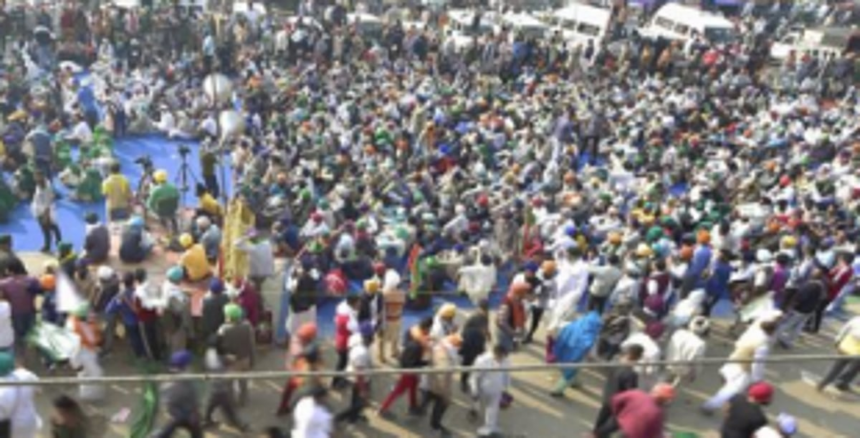
After 15 months of relentless protest by the farmers at the borders of the national capital, New Delhi, the end is finally here. The temporary structures, tents are in the process of being dismantled. The farmers were protesting the three, according to them, ‘draconian’ farm laws, introduced by the Union government. The protesting farmers believed that these three laws loosened rules around sale, pricing and storage of farm produce, which have protected them from the free market for decades.
The protests had first gained momentum in November last year when farmers tried to march into Delhi but were stopped by police at the city’s borders. Since then, they had stayed at the edge of the city, even during the second wave of COVID pandemic. However, the protesting farmers during the withdrawal of their 15-month long protests have warned the Union government through media that they will hold a review meeting on January 15 and if the government does not fulfil its promises, may resume the protest.
The farmers’ movement had become one of the biggest challenges for Prime Minister Narendra Modi’s government. Even after a dozen rounds of talks with the Union Agriculture Minister and the farmer leaders the stalemate had continued. With the Uttar Pradesh state elections drawing close, the Bharatiya Janata Party-led Modi government had to undertake a sly move and Prime Minister Modi announced in a national address on November 19 that his government has decided to repeal all the three farm laws. It was finally orchestrated on November 30 on the floor of the House of Parliament. In both the states like Uttar Pradesh and Punjab which are heading for state elections early next year, farmers are a formidable force and a big vote bank.
Recently, the Union government had given a formal letter to farm leaders, accepting many of their demands. The government also agreed to provide compensation to the families of the farmers who died while protesting. This is also being seen as a victory for farmer unions even as the government had conveyed to Parliament that it had no record of the number of farmers who died during the protests. Assurances were also given to the farmer unions that the government would not introduce the Electricity (Amendment) Bill in the Parliament without consulting all stakeholders. The government also clarified that it has already decriminalized the stubble burning provisions (Section 14 and 15) in the Commission for Air Quality Management (CAQM) Law. On the demand for a minimum support price (MSP), the Union government has also committed to form a committee which will include representatives from the Union and state governments, agriculture scientists, farmer groups and other stakeholders.
The three laws which are now repealed allowed farmers to sell their produce at a market price directly to private players, agricultural businesses, supermarket chains and online grocers. Some of the farmers made it clear that it was a move to benefit the big businessmen, rather than farmers. Most farmers currently sell the majority of their produce at government-controlled wholesale markets or ‘mandis’ at assured floor prices that is MSP. The laws also allowed private buyers to hoard food like rice, wheat and pulses for future sales, which only government approved agents could do before these three farm laws (now repealed) were implemented.
Such reforms, at least on paper, gave farmers the ‘freedom’ to sell their products outside of this “mandi system”. The protesters on the other hand believed that the laws would weaken the farmers and allow private players to dictate prices and control their fate. They said the MSP was keeping many farmers going and without it, many of them will struggle to survive.
Of five states, including Goa, preparing for their state Assembly election early next year, for the BJP the most important happens to be Uttar Pradesh. With the prospects of the ‘Jat’’ vote base shifting allegiance with the BJP in the western UP, the saffron outfit is being seen within the party struggling on at least 70 Assembly seats, particularly in Western Uttar Pradesh in the Hindi heartland which has a total of 403 seats in the Assembly.
By the retracting of the three farm laws and constitution of a committee to scientifically look into the issue of the MSPs BJP has got elbow room to work on the Jat Sikh-Hindu constituency alliance with former Punjab Chief Minister Capt Amarinder Singh, besides buying peace with the agitated Jats in western Uttar Pradesh. However, for the voters in western Uttar Pradesh and Punjab who are ready to press the EVM button early next year it will be too short a period for them to forget the 15-month long farmer protest.