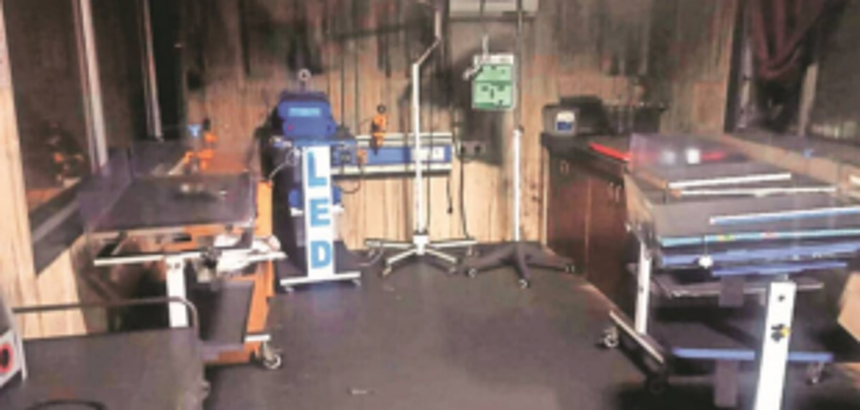
It is a wake-up call. Ten babies were killed and seven rescued in fire at Bhandra District General Hospital’s Sick Neonatal Care Unit (SNCU) at Bhandara city near Nagpur in Maharashtra. The babies who got killed were aged between three days to two months. Such incidents, anywhere in India or abroad, cannot be taken lightly and passed on as one of the “accidents”. Safety is paramount for all and regular checks on all vulnerable points have to be routinely undertaken and faulty ones repaired on a daily basis. Any lacuna in this exercise is inviting trouble. Fire safety is an important norm that needs to be considered during the construction of all buildings, especially hospitals. Compared to general buildings for hospitals it is a tough task to evacuate the sick and incapacitated patients. It is unfortunate there are still plenty of hospitals in India where fire safety is just words painted on the walls.
For such exigencies, regular training of staff and periodic mock drills are a must so that people are familiar to deal with the situation when it springs up. It is unfortunate that most of the hospital staff in India may not have the awareness of fire safety and the steps that need to be enforced in the face of a calamity. Highly dependent and immovable patients make it a difficult task to evacuate the hospital building in a rush and it requires training and specialised skill for all the staff in the hospital, including doctors.
Hospitals and other healthcare facilities required to work more on the easy and safe evacuation modes for all. Once in hospital, the healthcare workers are responsible for the safety and security of the patients and their attendants inside the hospital and they are expected to adhere to the legally approved fire safety measures. But is it happening? Passing the buck will not help. All have to come together to help each other and that can only be done through team work which comes from training and awareness.
As departments, and building constructions and renovations keep changing, the Emergency Management Plan should be constantly updated so that it stands the unexpected occurrence of a fire in a hospital. Fire accidents leave no room for thinking. The action has to be instant and with safety. With a detailed action plan that has answers to all questions and needs will save time for thinking and help you to react instantly in the right way. Involve all the departments of the hospital in the brief of this action plan and training and drills on a regular basis will help to make them alert and decisive.
Communication is of vital importance in reducing the damage caused by a fire accident and making of a command structure that has groups and subgroups is vital. These groups and subgroups form a communication tree and follow the instruction of the group leader in every floor of the building. Involving the Fire Safety Management team in the hospital planning and opening the gates of communication with this team well in advance will reduce the damage caused by the fire. Keeping the communication loop always open with the Fire Safety Management team will keep the damage to a minimum and to support it we have social media platforms for instant communication.
However, hospital evacuation is a challenging task. There are many types of evacuation aids available in the market. Hospitals must stock evacuation mats and sheets that could hold the patient firmly while sliding to a safer location. Fire-fighting equipment that includes smoke detectors, fire alarms, emergency exit signals, fire extinguishers and other fire fighting equipment should always be monitored on a daily basis by a specialised person in a building.
To reduce damage and saving lives, during a fire accident drill will always help as the physical practice or drill will enhance the memory of all. Staff members need to undergo fire safety training programmes and participate in the mock fire drills. This not only creates an immediate response but a reliable team in case of emergency.
Hospitals always have oxygen cylinders and electronic equipment and they carry a high-risk badge for fire accidents. One should have guidelines to conduct a comprehensive risk-assessment for our buildings and cities. Yes, risks coexist which can be complex. Hence, there is a dire need for safety concerns which cannot be ignored at any cost. By and large, these risk-assessment studies, training and regular drills should be an integral part of every master planning exercise, which should be revised for every change a building undergoes in the name of development.