On August 18 last year, the Government of India declared that Goa became the first ‘Har Ghar Jal’ certified State in the country, with all the 2.63 lakh rural households of Goa having access to potable water through tap connection. However, come summer, this access to tapped water is only in paper, with thousands of households across the State reeling under a scarcity of water.
Every year, between March and June, until the monsoon arrives, Goans irrespective of their geographical location, urban or rural, experience the perennial problem of water crisis. A drive through the villages in Goa will provide you with first-hand experience of how brawls erupt over water, especially when water tankers are pressed in to supply potable water to the residents in the rural areas.
With almost one and a half months still to go before the monsoon sets in, from North to South and East to West, every village will have a story to share about the acute water scarcity the village faces. While most of South Goa receives its drinking water from the Selaulim Reservoir in Sanguem, families residing only a few kilometers away from the reservoir have been reeling under an acute water shortage.
Move towards the western parts, and Morpila’s Kanjibagh and Bori Gotho areas complained of acute water scarcity with the parched villagers forced to rely on erratic tanker supply. The worst sufferers are the women, as the task of ferrying buckets and pots of water from the barrels on the street to their houses falls on them.
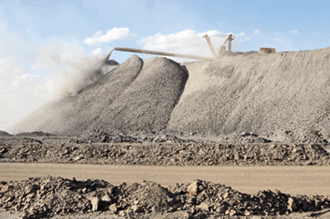
Travel up North and the mining-dependent areas such as the Pissurlem village have been facing water shortages for the last 25-30 years. The mining companies supplied tanker water to these villages for the last quarter of a century, however, with the closure of mining activities, the companies have stopped supplying water.
Goa is blessed with rivers originating from the Western Ghats – Tiracol, Chapora, Baga, Mandovi, Zuari, Sal, Saleri, Talpona and Galgibag – that serve the people as they make their way into the Arabian Sea. Mandovi and Zuari being the two major rivers are the lifelines of the water supply as they traverse almost 69 percent of the total geographical area of the State.
Traditionally, wells, springs, lakes, streams, and community tanks served as the source of water for households. Almost half a century ago, piped water supply was common in the towns and a few villages. As the concept of potable water through taps caught up and Goa set itself on the path of urbanisation more than any other state in the country, the sources of water were literally sacrificed and made way for ‘development’ projects.
Multi-dwelling large-scale housing projects are granted approval without a proper source of water supply, except the groundwater which is then illegally extracted through bore wells. Almost all the plateaus in the State, which have become residential areas during the last decade, are completely dependent on the bore wells which feed the residents of the colonies. As a result, the groundwater table is depleting, with very little time to replenish. On the other hand, a lot of the housing projects in the low-lying areas and plains are encroaching upon lakes and fields which served as wetlands.
Goa receives bountiful rainfall every year, and yet due to a lack of planning on water conservation, almost all of it flows into the sea. Even as the State faces a shortage of 80 MLD of water to supply to its population, the State has not been able to cash in on the natural resources through water reservoirs and with better distribution of treated water.
While a white paper on water distribution would expose the real status of the ‘Har Ghar Jal’, the Government needs to engage experts and recognise that ‘failing to plan, is planning to fail’.
The government has to study the carrying capacity of the State, not just as a tourism destination but also as a destination for holiday homes and second homes for those who wish to escape the extreme summer of other parts of the country.
One wonders how long it will take for the powers-that-be to realise that access to clean potable water is a fundamental right of every citizen and the duty of the elected government.