In a republic state, the general public holds significant importance as they are the ones to elect their representatives. Public decides who is capable enough to understand, raise and resolve their issues on the right platforms. They are the ones to assess who is capable of extending the benefits of the system called government to them.
And so, it is duty of the elected representatives to carry out political and social work while being committed to the people. Whenever one asks a politician, they claim that they are doing 80% of social work and only 20% of politics whereizzzzn the reality is contradictory. Majority of the people would agree that country has not materialised into an ideal republic state as envisioned by the Constitution. BJP came to power by accusing Congress of not resolving many issues despite ruling for about 65 years while Congress has criticised the saffron party of strangulating democracy. However the real question is, have the problems of the common man been resolved amidst the political accusations and rebuttals? Lately the ruling party has been using the word ‘Antyodaya’ a lot. Originating from beautiful Sanskrit words of ‘antya’ and ‘udaya’, the coined term antyodaya means the rise and development of the lowest rung of the society. Does it resonate with the actual reality? The question is applicable to the State of Goa as it is for the rest of the states. In a recently occurred unfortunate incident, a 62-year –old man died of cardiac arrest as the road leading to the ailing senior citizen’s house was inaccessible for the life saving ambulance to reach the spot.
After the ambulance driver told the distressed family members of Paik Gaonkar from Kajugotta in Sanguem that he was finding it hard to reach the place, the Gaonkar’s brothers and villagers had to wrap the patient in a blanket and walk 2-km to where ambulance was parked. Sad but true, the patient died even before reaching the hospital. Last month, Chief Minister Dr Pramod Sawant during the inauguration of New Zuari bridge’s second phase stated that a record Rs 20,000 crore had been spent in the last 8 years over the construction of highways and flyovers. He also added that more roads and bridges are proposed at a cost of nearly Rs 3,000 crore. For a State that hosts roughly 25 lakh tourists annually, the fast development of infrastructure is expected. But the government must also pay attention to the infrastructure in rural areas when national highways and flyovers seem to be prioritised the most. The government, which claims to boast of a double-engine, needs to check if it is able to pull all the passengers with them if a life is lost just because the road was not accessible for the ambulance.
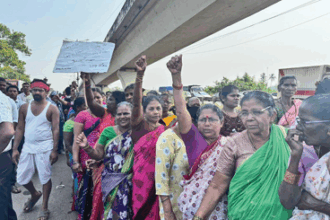
In a democracy, the state’s head is expected to look after its people which is why it is necessary to include general public in the process of development. Otherwise, people protest and dampen the speed of development as evident in Goa at the moment.
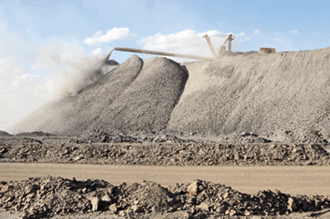
Velsao’s fight against double tracking, Mulgaon and Mayem’s fight against mining while Bhomkars’ being firm on not letting highway expansion destroy their village are the burning examples. It is vital for these issues to be given a considerable thought in a republic democracy. The government’s decision to ask for the suggestions from the experts and public while drafting the budget is a welcoming move but this budget should be inclusive. Infact, the budget should emphasise on ‘antyodaya’ principle in its true sense of the world. Although the condition of infrastructure signals the development of a State financially, the infrastructure singularly cannot be a parameter to analyse the overall development. As per the new methodology of Niti Aayog, the poverty line or poverty rate is determined by multi-dimensional criteria. For example, a family’s annual income cannot show the entire picture and so, the quality of other facilities such as health services, transport services, educational facilities and social status are taken into account. It would be a fallacy to determine Goa as a developed state just because 45% of Goans have one vehicle per head. The problems faced by Goans in rural areas require serious deliberation. Around 90 per cent of gram sabhas turn stormy as people are losing their belief in the system. If the government truly wishes to change the picture, then the government and the administration need to take an extra step by bringing transparency in their operations. The administration will have to be people-oriented. The government may bring better changes in the system but the onus is on people to maintain the social harmony. The factors causing social divide over castes and religions need to be promptly sidelined which is necessary given the country’s present atmosphere. Considering how diverse India is in regard to communities, castes, languages, religions and cultures, many countries had expressed worries as to how such a country with myriad differences would operate. However after independence, several commentators suggest that India has the potential to become a global superpower. One cannot forget the sacrifice, contribution and dedication of innumerable people who helped in shaping this vast nation.