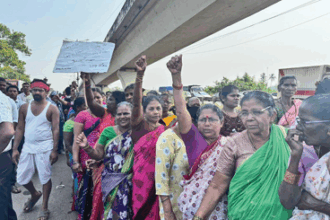
From the weekend into the start of the next week, Panjim, a smart city in the making for the past several years, suffered from several power failures. These did not result from a drop in supply of power or due to load shedding. There is a power crisis in North India but this had nothing to do with the power failures in Goa, in Panjim in particular. The reason for the long power failure on Saturday that kept Panjim in the dark for several hours was that one of the two cables that supplies power to the city got cut during work by the Sewerage Department and the Power Department has to work to restore the supply by supplying power through another source.
What this again indicates is that there is no coordination between the various government departments in the State, and one department is just not aware of what the other is doing. When one department is undertaking work that involves some digging, shouldn’t it possess the plan of the underground cables, water and sewerage pipelines, storm water drainages so that it avoids those particular areas, or if it has to dig in the same place, take precautions not to damage the cables and pipes below? This isn’t a question that should be asked, but going by the various times electricity cables and water pipelines have been cut – not just in Panjim but across the State – during works undertaken by other departments it becomes necessary to pose this query.
It very often occurs that when there is a power outage or a water shortage, the department that is concerned with the supply is blamed, the social media gets a large number of posts targeted at that department. But, given the circumstances that we are witnessing, it would not be right to point the finger at just one department for the troubles that the citizens face. This is a collective failure for which the various other departments must accept their fair share of the blame. It can’t, however, stop at that. The government departments must find ways and means to stop these occurring or at least reduce the number of such instances that affect the quotidian of the people.
A simple solution to the constant irritants that plague the citizens is better coordination among the various government departments. This will not add to the budgets nor result in more time being taken to complete the work. It will, on the other hand, facilitate a smoother operation. The almost regular breakages of underground cabling and piping establishes beyond doubt that such coordination between departments just does not exist. This is also noticeable when freshly laid out or repaired roads are dug up by other departments, an issue that has been highlighted at various times in the past, but not been heeded by the authorities for undertaking a change in the planning process, as a result the lack of coordination just gets exposed time and again.
There is need for better planning, cooperation and coordination among departments when undertaking works not just in the capital Panjim but across the State. This is not an issue faced only by the residents of the State capital, but of those in every town and village at various times. It can be reduced, if not entirely ended, by very simple methods already enlisted. To make it happen the government departments must show some initiative without which it cannot occur. Inter-departmental coordination should solve the problem. It will not only avoid accidents of such nature that cause discomfort to the people, but will also save time and money for the government that is spent on the repairs. Some pragmatic decisions are required.