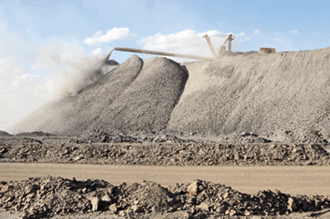
There is at least one group of villagers unhappy with the governances in the State and have decided that the best way to get the attention of the authorities is to threaten a poll boycott. With less than a fortnight for the February 14 Assembly election, the residents of Subdalem of Barcem panchayat have threatened to stay away from the polling booths if the government fails to stop the illegal stone quarrying in Cordem. Their complaints range from the houses being at risk due to the quarrying as gelatin is used to blast the rocks and has led to cracks in the walls, the effects on natural water resources, the dust pollution that has affected the cashew plantation and the environment, a bridge that has weakened due to the plying of heavy vehicles. They claimed that they have lodged complaints with various government departments, but no action has been taken. They have also alleged that those involved in the illegal quarrying have political patronage.
At this time this is merely a threat from the people of Subdalem to boycott the elections, there is no assurance that they will take it forward. Yet, this is not a new kind of threat. This is not the first threat of a boycott of the polls. In November last, a similar threat was made by the residents of Assagao that they would boycott the 2022 Assembly elections if the water problems they have endured for several years were not resolved. The 2019 Lok Sabha elections had in fact seen such boycotts in some States, as people actually did not go out to vote in sections of villages. The threats arise due to the apathy of the government and the authorities towards the problems of the people.
What is clear from the threats is that for the people the basic services are important and that if the government is not willing to listen to them and deliver these services and ignores their demands, the only manner to gain attention is by threatening a poll boycott. Whether the villagers will go ahead with their threat is a different matter, but what we have here is a group of people for whom it does not matter who is their MLA or which party comes to power. The only thing they want is that the illegalities in the village stop or that they receive the basic amenities. That the government has been unable to deliver on this is a reflection on the governance in the State.
Protest has always played a role in governance, but is a poll boycott by the voters a suitable form of protest in a democracy? It is an extreme step and it reflects on the exasperation on the part of the people who having exhausted all other avenues to be heard can only contemplate such a move to get the attention of the government and the authorities. There is, however, a flaw in such a move as if the voters boycott the polls, then they will not get the candidate of their choice elected. The result of the election will entirely depend on the people who voted and it will be their choice who will be elected. In the case that it being discussed, it is a small section of the electorate that has threatened to boycott, so it may not have a very massive effect on the result, but there have also been candidates who have won by slim margins, and any boycott could alter the results.
That the people are willing to boycott the elections, despite being well aware that this could get their constituency a representative not of their choice indicates just how disgruntled they are with the system and the administration.