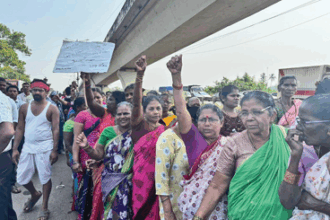
While the State has been totally focused on the formalin in fish issue, and the latest decisions banning the entry of fish-laden trucks that do not possess all the documents, into the State, a section of the fishermen, especially the traditional fishermen, have been fighting for what they claim is essentially their survival. They feel that the Sagarmala project, and all the related plans, would kill the fishing industry in the country, and this is what led to the fishermen in Goa and the west coast taking out their fishing boats and mechanised boats and protesting.
The National Fishworkers Forum (NFF) that staged a protest at Khariwado, Vasco, opposing the project has listed out a number of reasons why the Sagarmala project is not feasible. But it is not just the fishermen from Goa that protested, but the traditional fishing communities all along the west coast from Kutch to Kanyakumari joined in the protest on the same day. Besides the fishermen in Kharewada, there were some 5000 fishermen in Mumbai, and others who ensured that their opposition to the Sagarmala project was heard.
Take a look at the objections that were raised at the protest: the inclusion of six Goan rivers in the National Waterways Act, 2016; autonomy to Mormugao Port Trust (MPT) by enacting the Major Port Authorities Bill, 2016; diluting CRZ notification of 2011 in the form of draft CRZ 2018 notification; proposing 4-lane coastal road from Canacona to MPT; doubling of railway line from Hospet to MPT; demolishing the houses of fishermen at Baina; proposing four expansion projects at MPT; increasing coal handing and, not just at the State level, but beyond that, the proposed designated corridor for merchant ships.
The last, is one of the main reasons for the protest as the draft guidelines issued by Directorate General (Shipping) last month, restricts the fishermen from fishing between 15 to 35 nautical miles from the coastline in the Arabian Sea. These 20 nautical miles have been proposed as a designated traffic corridor for merchant vessels between Gujarat to Kanyakumari as a remedy to mid-sea collision. The fishermen say that just this would impact their business hugely as it is within this restricted corridor that they catch the most and varied fish. A major fear of the fishermen is that if the shipping corridor is notified, then, thousands of fishing boats and canoes will be barred from the notified areas, which would displace the fishermen from their traditional fishing areas.
The National Fishworkers Forum had earlier alleged that the proposed plans for the shipping corridor and the other projects would dilute the environment protection measures that are in place and lead to the privatisation of the natural resources, which are the sea, rivers and coastline on which the fishermen are dependent for their livelihood. The fishermen are fighting for their survival and it is for the people to support them. Their fears are not entirely unfounded and need to be considered by the Centre before it goes ahead with the Sagarmala project.
This is also not the first time that the Sagarmala project has been questioned in Goa, or that there has been opposition to it. Ever since the project was mooted, there have been apprehensions raised over the ‘nationalisation of rivers’ and the resultant consequences on the environment in the State. Clarifications by the government that the river works to be undertaken under the project will not affect the ownership of the rivers and that the State government will have a say in all decisions taken, has not convinced the people. Given the reservations that the Sagarmala project has raised, the government should produce a whitepaper that will allay all the fears.