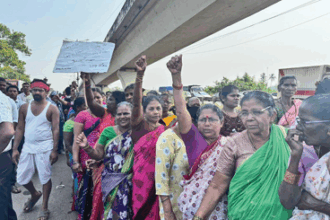
The battle to save the villages of Goa from vertical development continues unabated. The decision of the Town and Country Planning (TCP) Board to drop all the villages from the Greater Panjim Planning and Development Authority (GPPDA) is a part victory for the people who are convinced that it is only when all rural areas are dropped from the ambit of planning and development authorities, that Goa’s villages will be saved. A day after the TCP Board met and decided to restrict the new GPPDA to merely Taleigao and the government land in Bambolim, those demanding the removal of all villages from PDA jurisdiction called it a ‘half-hearted approach’ and renewed their efforts to continue the fight.
Goenkars Against PDA (GAP) has stated in no unequivocal tones that they will be satisfied only when a notification is published in the Official Gazette dropping all the villages from the PDAs. The demand for dropping villages first arose earlier this year when the GPPDA was formed and villages from the constituencies of St Cruz and St Andre were brought under its jurisdiction. Every village that came under the GPPDA, with the exception of Taleigao, demanded at the gram sabha to be removed from the PDA and passed resolutions wanting out. As the movement grew, TCP Minister Vijai Sardesai very suddenly agreed to this demand for the people and the TCP Board finally decided as per the Minister’s promise.
But the protestors expected more from the Board meeting. They wanted that all villages included in PDAs across Goa be dropped. Those demanding the exclusion of Calangute and Candolim from the North Goa PDA are wondering why the TCP Board ignored their demand. A former MLA of Calangute, Agnelo Fernandes, also questioned why Arpora, Nagoa, Parra were not dropped from the NGPDA. As political voices creep into this people’s agitation that has successfully managed to keep politicians away, one can’t but pause to reflect on a question raised by the former MLA of Calangute, who asked whether the selective removal of 10 villages from GPPDA was a move to divide the protesting groups and hence dilute the movement.
The anti-PDA, anti-RP 21 movement is today one of the strongest people’s groups in the State, and is gaining in strength, as it reach and appeal goes out to all villages. It is not just the Goenkar Against PDA but also the Goencho Avaaz, which is an umbrella organisation of various NGOs, that is causing sleepless nights to the government. Causing a rift among the various organisations in this fight could lead to weakening the resolve of the groups and give the government some respite from the onslaught it is facing.
Whether it be PDAs, RP21 or amendments to the TCP Act that will bring in more power to the people, the entire demand revolves around the ‘One State One Plan’ demand that is growing in the State, along with the demand to implement the 73rd the 74th Amendments to the Constitution. The small size and population of Goa makes it ideally suitable for just one land plan, rather than a Regional Plan that incorporates the entire State but is essentially for the rural areas and Outline Development Plans for the notified planning areas, non-PDA towns and villages for which plans are prepared. Essentially what the people want is participative planning as mandated by the Constitution.
The hesitancy of the government in permitting this raises the question of whether there indeed are certain reasons to keep the people away from the planning process. A transparent system in planning would ensure that there are no reasons for allegations or raising questions at a later stage. It is time the government instituted such a system to avoid future dilemmas.