One of the biggest stumbling blocks in bringing the mining agitation under control at Panjim on March 19 was lack of coordination and leadership among the agitators. As the day wore on and the situation went out of hand, it was clear that the administration was speaking to a disjointed bunch of loose cannons.
At each step the government’s messaging or response wasn’t reaching a central point and then filtering down the ranks for a proper discussion. Instead it went to various groups, with the messaging getting completely diluted. And then the responses became totally knee jerk.
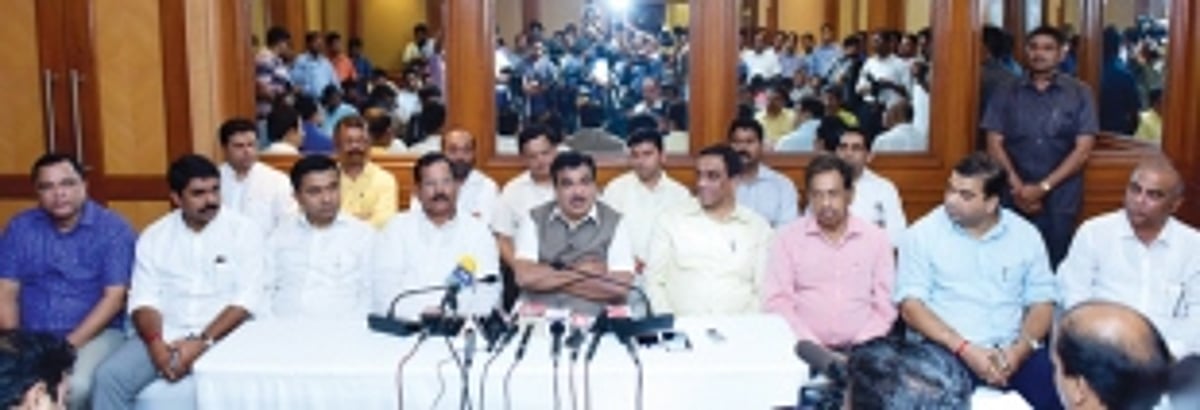
Moreover, there appeared to be a bit of a communication gap or a communication slowdown between senior minister Sudin Dhavlikar and the North Goa District administration. While Dhavalikar wanted the crowd to assemble in front of the central library, where he had incidentally arranged biscuits and water for the agitators, District Collector Nila Mohanan insisted that they move to Azad Maidan. It is at this point that the first breakdown happened with the government and protestors. North Goa Truck Owners Association President Nilkant Gawas was in no mood to go to Azad Maidan and said that since this was democracy, he had a right to agitate. Even by holding Panjim to ransom and making the common man suffer.
But was he the sole voice of all the mining dependent stake holders? And did he have the command over the others. Did all the other support organisations present there see him as the voice of the truck owners, the main body of agitators? The biggest error of judgment on the part of the administration was not insisting that they would talk to a group of three or four people rather than a lose conglomeration called “mining dependents” who were loosely held by a common problem but did not recognise any leadership which would front its battle with the government.
The administration did not quite fathom that there would be so many support groups who would also add up to the numbers bit by bit, with none of these groups confirming to any plan and without any leadership. These were united barge owners, mining machinery owners, shipping agents, stevedore associations, boat owners, custom house agents, shipyards associations and so on. These professionals will be directly or indirectly affected by the mining slowdown and were there in solidarity. But yet again they weren’t there to take decisions or even ensure that the agitation didn’t turn violent or disturb the peace of the city. In fact many of them helplessly stood by and heard the abusive and boorish behavior of the principal mining agitators.
And then came the taxi lobby which gets really hurt and upset if they are referred to as the ‘mafia’. After their actions on black Monday, let them once again introspect if this sobriquet does fit. We need to ask and know how did the police fail to gather intelligence, that a powerful, even if small section of the taxi lobby would enter the scene, and take the agitation to a stage of chaos and disruption.
And that is exactly what happened as they provoked and asked the mining dependents “not to listen to them” (the government). Didn’t any of the officers say at any level whose jurisdictions fall within the coastal belt, have an inkling that the taxi lobby would cause disturbance and disruption. When the leaders of the taxi unions entered the scene and even turned up at the meeting of the stakeholders with the cabinet advisory committee, it was clear that this agitation had veered totally out of control and had turned rogue. The head of the North Goa Truck Owners Association’s apology today about the behaviour of the agitationists is an affirmation of this.
The failure was on both sides. An agitation cannot be so disjointed and leaderless, even if the reasons for the agitation, for arguments sake only, meritorious. At the same time, an administration needs to be better prepared and have more intelligence information.