The Supreme Court appointed expert committee on how mining dumps should be dealt with in Goa has exactly seven days to submit its recommendations to the Apex court. The issue unfortunately, like most else, hasn’t got the attention it deserves, due to, among other things, the complete lack of domain expertise and vision of bureaucrats in charge of treating the sector while it is at the throes of complete collapse.
If mining was a patient, it should have been in the ICU of a speciality hospital. But in Goa the government is not working with specialists nor is there a functioning hospital to treat this patient. The Department of Mines and Geology doesn’t have single full-time senior geologist on its rolls. It will therefore be interesting to ask how the government plans to give cohesive and most importantly, scientific suggestions to the Expert Committee on dump management.
Having said that, let us look at the Committee itself. Headed by an extremely competent and respected Head of Department of Earth Sciences Delhi University, Professor C R Babu, and having among its members, Professor B K Mishra of the Institute of Minerals and Metals Technology, Dr Dhiman, former Chairman Ground Water Authority and the Goa government representatives Parimal Rai and Secretary Mines Pawan K Sain, the committee (barring the Goa officers), has immense domain knowledge to address, among other issues, the key one of how to handle other minerals existing in both the stable and unstable dumps.
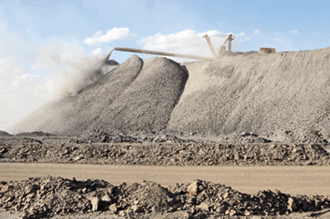
Apart from the total dumps of 750 million tons of dumps already existing, (stable plus unstable) fresh mining, as and when it takes place, of 20 million tons annually, will generate 80-120 million tons of dumps. The expert committee will waste a huge opportunity if it restricts itself only to the iron ore extraction from the dumps. For years, other minerals of extreme importance now, which exist in the dumps, have been ignored. This committee can take a historic leap if it identifies those minerals, allows their export and charge royalty on those too. It’s a win-win situation for all. The dumps get effectively disposed and the government earns more from the dumps, along with companies extracting it. It’s important to remember that dumps were created since fifty years at a time when rare earth minerals (eg Calcium Bentonite which absorbs nuclear radiation) were not discovered.
Instead, what the Expert Committee seems to be doing is limiting itself to only looking at iron ore extraction from the dumps. While the Committee is citing the relevant portion of the Supreme Court order to limit itself, this logic prime facie appears incorrect. The relevant paragraph (ix) of the Supreme Court Judgment of April 21 reads “The Expert Committee will submit its report within six months from today on how the mining dumps in the state of Goa should be dealt with and will submit its final report twelve months from today on the cap to be put on the annual excavation of iron ore in Goa”
The mandate is broad-based and allows for out of the box thinking and decision making on the key issue of dump handling as it encompasses issues of environment, commerce, economy and even human rights. In Sankhali, right next to the Rudreshwar temple, there is a full housing colony which has come up on top of stable dumps. Then there are other homes and schools, in fact a civilisation, that has been built on dumps.
Therefore when you look at the visit of this committee, less than a week before it needs to submit its report on dumps, with very little ground work done, it belies the academic and professional strength of the experts. It is surprising that the Goa government is seeking time now to send its replies, because the Chief Minister is not available. This shouldn’t have been left so late.
Settling the issue of dump management assumes significance because it is an extremely important positive that has emerged from the universe of the closure of mining and a Supreme Court monitored revival plan. To restrict it to the narrow confines of management of iron ore and not the management of minerals, will be a wasted opportunity and serious long term loss.
The government needs to keep just two factors in mind when contributing to the dump management policy. To get the dumps removed and earn from the process by identifying other minerals that exist in them.
Sadly, as always, experts are blind to the simplest of realities.