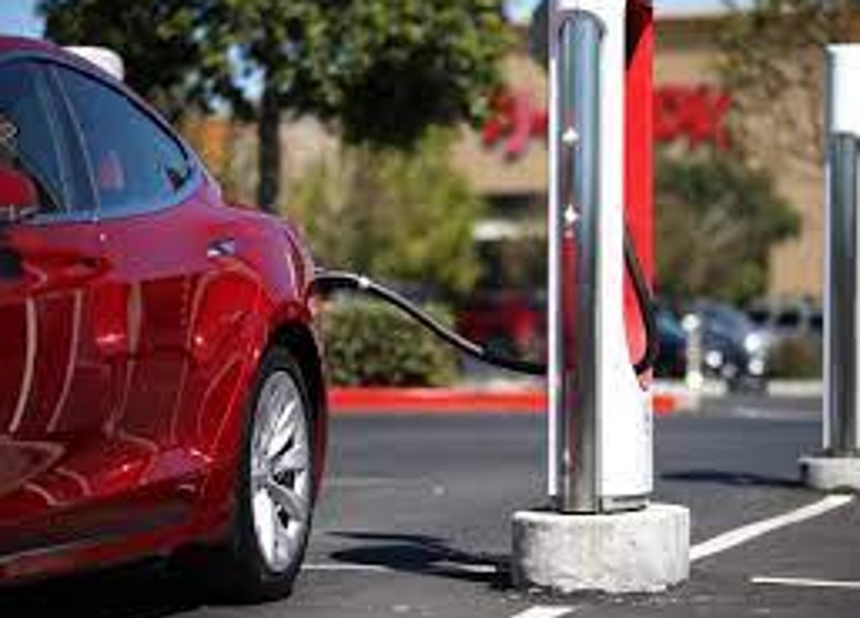
Inadequate availability of Electric Vehicle (EV) charging infrastructure has been a big deterrent for the full adoption of EVs in India. Confidence among the customers of EVs needs to be brought in, at the topmost priority, if India wants to shift from dependence of fossil fuel to electric mode. To address this issue, the Union Ministry of Power had issued “Charging Infrastructure for Electric Vehicles — Guidelines and Standards”. These guidelines outline the roles and responsibilities of various stakeholders at the Central and State level for quick deployment of public EV charging infrastructure across the country and that too, to provide an affordable tariff chargeable by public EV charging station operators and owners and EV owners. Since it takes normally 45 minutes to a full charge for a four wheeler, time is also important for the vehicle owners.
The good news so far is, that the oil PSUs have announced plans to set up 22,000 EV charging stations in prominent cities and on national highways in the next one year as was promised by the Union Heavy Industries Minister Mahendra Nath Singh in the Parliament and his visit to Goa thereafter. Of these 22,000, 10,000 will be installed by IOCL, 7,000 will be installed by Bharat Petroleum Corporation Ltd (BPCL), and the rest of 5,000 will be installed by Hindustan Petroleum Corporation Ltd. (HPCL). The Union government had said earlier that India has a total of 1640 working public EV chargers at present. Out of these, nine cities (Surat, Pune, Ahmedabad, Bengaluru, Hyderabad, Delhi, Kolkata, Mumbai, and Chennai), which have a total population of over four million have approximately 940 stations.
Apart from these, private players too have taken the initiative to install EV charging stations as part of a convenient charging network grid to uplift vehicle owners’ confidence of those who are driving long distance on the road. Yes, it is gradually improving but there seems to be no early bird advantage except on beating the rising fossil fuel prices but the comfort and confidence will only come when the infrastructure is set up for ease of travelling.
The Union Heavy Industries Minister had also informed the Parliament in December last year that “We are working towards setting up charging stations in 22,000 of the total 70,000 petrol pumps across the country and work is on in this regard.” He had assured the House that the priority is to set up charging stations on express highways, highways, and populated cities, and later, this will be taken down to rural areas and adding that work is underway to produce lithium batteries in the country to make India self-sufficient and production linked incentive scheme (PLI) scheme of Rs 18,100 crore has been evolved. Agree but all this will take its own time to settle down but is the government pushing the battery swapping concept in a big way? Yes, it has environmental hazards which includes disposal of defunct batteries but when a mega project is undertaken it is taken to be granted that these issues must have been on the plate for discussion.
For several decades, technology, in the modern sense, is upgraded on a daily basis for the ease of living. Chips have gotten faster, smaller and cheaper, enabling breakthroughs that were once just a fantasy and unaffordable. One can video chat with loved ones anywhere in the world, remotely perform life-saving surgeries with a robot, and surf all human knowledge from powerful computers the size of our hands. If these can be done easily can battery swapping improve the lives of millions and address climate change, now and in the future?
Yes, start-ups in India are already fighting to get solutions to save time, which is critical while travelling. The question is who is supporting these innovative ideas which are now being experimented by the start-ups?
Can battery swapping transform urban mobility, yes it can? Will it catalyse EV adoption the same way the Web sparked the PC revolution of the early-1990s or make the quantum leaps smart phones had on mobile computing, yes it can. Experts who are working on it have ventured into the next frontier of what is possible with software and services that have enabled our smart batteries to last longer, become more efficient over time, and easily slot into a second and third life before they are recycled.
For a traveler, wherever one is driving to, time is critical. Even though we may have the best of highways and roads with smart fast tags for highway toll tax points, the wait at charging stations will be a big “disappointment” for the EV owners. The government, if serious in using electric mode as fuel, has to look into how to cut short on travel time and achieve “Gati Shakti”.