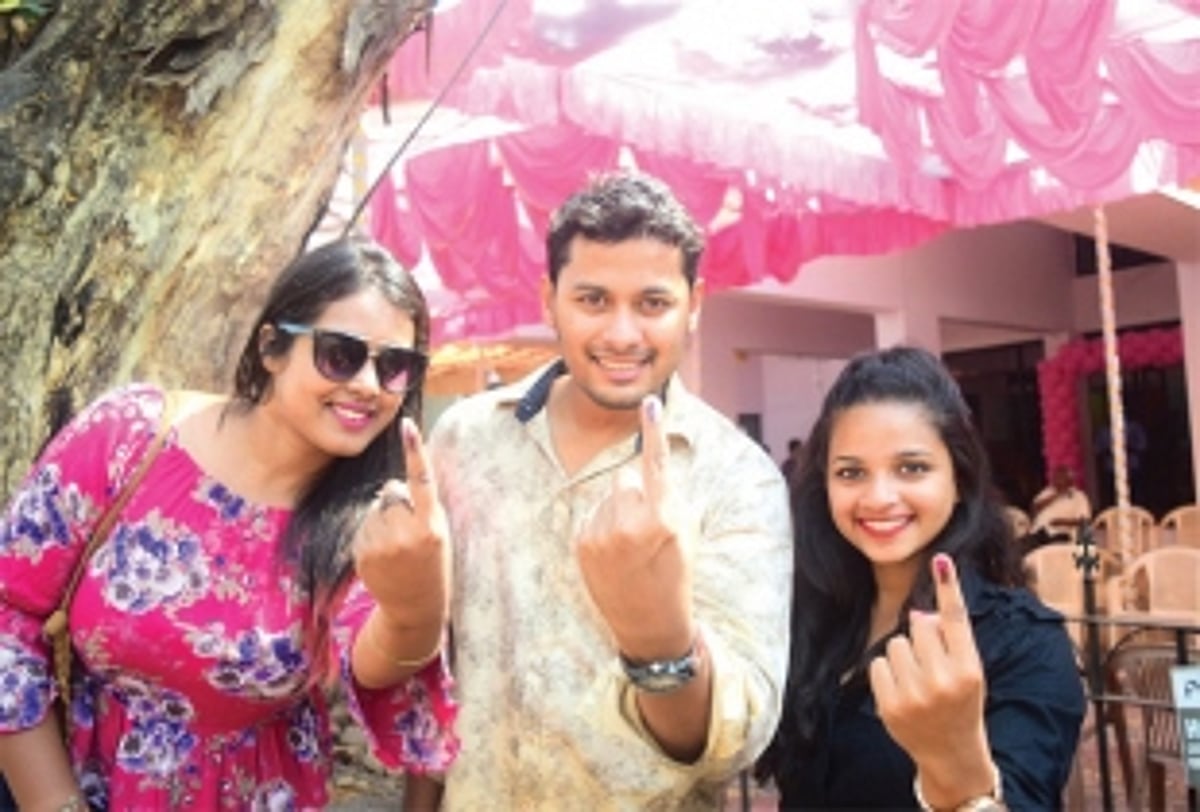
Goa has voted and the electronic voting machines have been sealed. The State, as also Punjab that voted on the same day, will have to wait for exactly five weeks, until March 11, before the EVMs are opened and their secrets revealed. In the meantime, as Uttar Pradesh, Uttarakhand and Manipur vote, the model code of conduct will continue to remain in place in Goa until counting day and a few days beyond that. The model code of conduct will be lifted only in mid-March and till then the State can expect few new announcements, even as political activity in the State drops down from the frenzy of electioneering that was witnessed in the past month.
Political activity will recommence after counting of votes when the time comes for government formation. If the election results give any single party a clear majority, then the process may not garner much excitement, but should there be a fragmented result, Goa can expect some days, weeks and perhaps months of political turmoil while a stable government is put in place and begins to work. Stability is what is most important for Goa – any state for that matter – so that there can be smooth functioning of the government.
This brings us to succession in Indian politics which, especially in political parties, has been marred by family feuds that has led to splits in the party. Take the case of Tamil Nadu. On the day Goa was voting, speculation emerged from that State of a change of guard in Chennai. Ever since J Jayalalithaa died and O Paneerselvam took over as Chief Minister of the State, there have been undercurrents in the ruling dispensation – AIADMK – that rose to the surface quickly enough, within two months of her death, to force the change in Chief Minister. Jayalalithaa’s protégé V K Sasikala, who was at the late leader’s bedside when the former Tamil Nadu chief minister passed away is expected to be elected as the party leader on Sunday and hence the new head of government in the State. Sasikala’s ‘coronation’, for it can loosely be called so, was only a matter of time, after she was appointed general secretary of the AIADMK following Jayalalithaa’s death.
If Tamil Nadu’s is not a family feud per se, than Uttar Pradesh where Mulayam Singh Yadav and son Akhilesh Yadav have split the Samajwadi Party after a long fight last month is a case in example. But such succession goes beyond just political party internal bickering as it affects governance. By anointing a successor from the family or from the immediate circle of cronies, political parties fail in making a democratic choice and giving the state or the nation the best possible leader.
Take the instance of the United Kingdom last year, when after losing the BREXIT vote, David Cameron announced that he would be resigning as Prime Minister. The Conservative party then set in motion the election for a new leader where interested MPs put forward their candidature and the other MPs then voted for the person of their choice, in this case Theresa May, to take over the party and the Prime Ministership. This rarely happens in India, as CMs are usually appointed by the high commands or central leadership of the party and only one name is proposed at the formal meeting to elect a leader, or in the case of a regional party, the ‘strongman’ displaces all others to take over the leadership.
Even before the elections could be held AAP in Goa had already announced its CM candidate and during the campaign BJP stated that the CM could be someone sent from Delhi, which fueled speculation that Manohar Parrikar may return to State politics. While Goa may get a government it has voted for, unless a fragmented result brings a coalition, it may still not get a Chief Minister who is elected by the Members of the Legislative Assembly, without any outside influence. Democracy in political parties falls short of the tenets of the system.