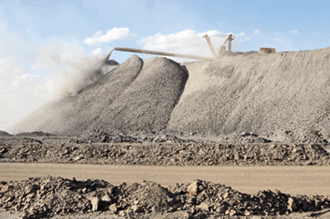
Impact of strong action against the MPT – action which the government and the pollution control board was forced into taking due the blatant excess handling of coal, and lack of confidence in the pollution mitigation plans of coal handling companies and the port, has been sadly felt by the port workers
As it always happens, the common man, the smallest worker at the end of the chain gets impacted the worst when curtailments and closures are forced upon them. And this is exactly what stares at the Mormugao Port and Railway Workers (MPRW), with MPT suffering a loss of Rs 90 crores in the last fiscal. A circular issued, after the suspension of coal handling activities at berth No. 6 mentions the curtailing of several benefits of the employees which will reduce the take home amounts of port workers.
And unlike the MPT or any of the giant conglomerates who wield tremendous power and control, have even acknowledged that they have contributed to coal pollution during transportation. The humble port worker has been far more honest. And yet he is the sufferer.
MPRW President Leonard Rodrigues said “Our union and workers strongly oppose the pollution and inconvenience as caused directly. However, due to the certain reasons which are beyond the control of port, workers and dependents consisting of 18,000 lives should not be penalised”.
This is an honest man speaking from the heart. And look at the mature well thought out comments he makes on behalf of his union “We are prepared to handle any type of cargo without inconveniencing and creating problem to anyone in port town. We must be alert in controlling pollution” And while he says that currently all the guidelines given by the state agencies are being followed which we beg to differ) he also adds that if there is need for more mitigation measures then the coal handling agencies should take such measures.
While acknowledging MPT’s plummeting profits, let this be stated extremely clearly, that MPT and the coal handling majors like South West Port Limited do not have the right to fight their case by firing from the shoulders of their poor workers. MPT”s profits have crashed due to a mix of extraneous factors and its unwillingness to have a zero-tolerance policy towards pollution and excess handling, means it has no one but itself to blame. And to top it all, less than perfect handling of coal has led to correct and strong reaction from the Goa Pollution Control Board, leading to a stoppage of all coal handling operations. It is intriguing therefore, why MPT is seeking solutions from the government when solutions lie within itself. And some of the solutions that should be debated are
1) South West Port Limited should be held accountable for excess court hand ling along with MPT and a heavy fine imposed.
2) MPT should conduct regular inspections on railway tracks plus have live footage of wagons leaving its premises to check if coal wagons are covered in a water tight manner.
3) If coal spillage is noticed on tracks for any reason at all future coal movements should be stopped unless an inquiry held and justifiable reason given. And more than three instances of spillages should lead to a total stoppage of coal shipments for that company.
The problem with the manner in which coal pollution has been dealt with is that no concrete and hard steps have been offered or suggested to curb pollution except the normal lip service that pollution should be mitigated and controlled. You cannot mitigate or control pollution by lip service. You need tangible steps that should be taken with accountability fixed.
Like the mining workers during the time of the mining closure, intervention is needed at the highest level so that port workers do not suffer, and the way out to make MPT profitable is to ensure that it gets enough business and clean cargo, whose handling and movement does not cause any pain and suffering to anyone in the handling area or along the route of transportation.