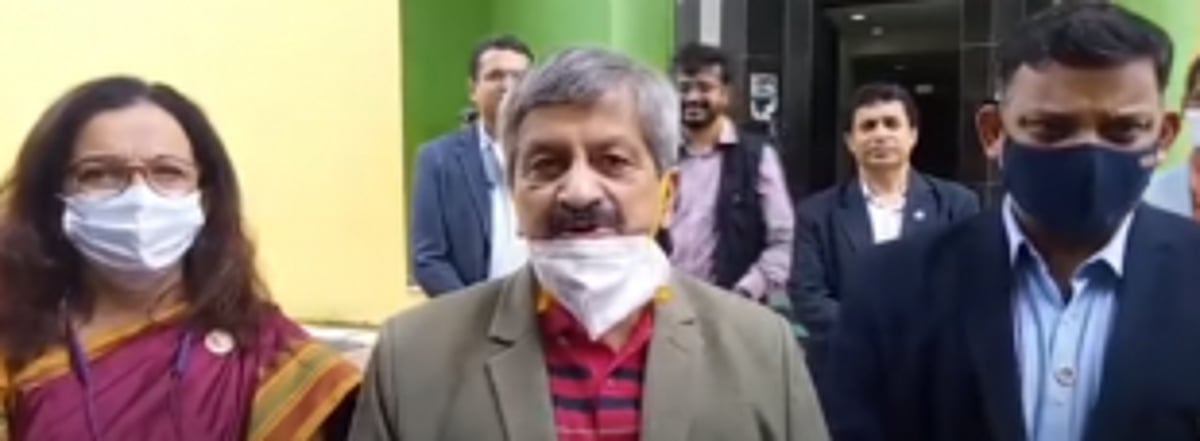
Is Goa prepared for a third wave of the coronavirus should it hit the State? The review meeting of the taskforce constituted to prepare the State and the infrastructure for such an eventuality believes that Goa is prepared if a third wave does hit the State, and that this wave it would not be as devastating as the second wave, primarily because a large percentage of the population has already been vaccinated against COVID-19 and that the facilities to meet such an occurrence are in place. He elaborated that preparedness is basically for children who are likely to be affected by the third wave. Infrastructure has been put in place for children, while for adults it is already there.
Being prepared for children is important as the prediction is that a third wave would affect children more than adults. While vaccines have been administered to adults, persons below the age of 18 have not got them. They are therefore most vulnerable at the moment. Goa is depending on the vaccine working, as 11 lakh persons have received the first dose, while 3 lakh persons are fully vaccinated. Going by this, it does appear that the State has turned just a little bit complacent again as the urgency of meeting a third wave that was on display just weeks ago is no longer visible. Yes, the task force is there and the infrastructure is also there. Goa may be prepared in terms of medicines and infrastructure, but is Goa alert to the rise and fall of COVID cases?
Just because the number of deaths is now in single digits and there are days when no deaths due to COVID-19 are reported, or that new cases are in double digits just sometimes crossing 100 but dropping again the next day, the State cannot afford to be complacent. New cases, instead of dropping further have kind of achieved a plateau and are fluctuating around the 100 figure, an indication that the virus infection is not over. Goa, despite the high vaccination count, the curfew, enforcement of COVID-appropriate behaviour has been unable to bring down the daily count to low double figures. There has been a slowdown in the infections, but the virus has not stopped spreading. That should be a matter of concern.
Last month, the Joint Secretary in the Union Health Ministry, asserting that the country was still dealing with the second wave had said there is need to introspect if ‘we can afford the misplaced belief that COVID-19 is over’. A month later, we perhaps should still be introspecting on this. The pandemic is not over, the numbers may be down, the test positivity rate may be below 5 per cent, but the virus is still around and it is still infecting people. The curfew that had been imposed in the State in May when COVID-19 cases had escalated beyond what it was ever imagined it would, is still in place with weekly extensions, though by now most activities have been permitted. Only a few still remain banned in the State.
Schools for instance are not yet opened and a decision will be taken only after Ganesh Chaturthi. Simultaneously, the State is also looking at opening the doors to foreign tourism by seeking permission for charter landings in the coming season, though this again depends on how the pandemic situation develops in the coming weeks. The first wave last year, had seen cases increase in August, rise to a high in September before slowly beginning to drop in October. If that pattern repeats, then Goa needs to be very careful about opening up fully. Decisions on reopening schools and permission for foreign tourists will have to wait not just till after Ganesh Chaturthi, but even later.