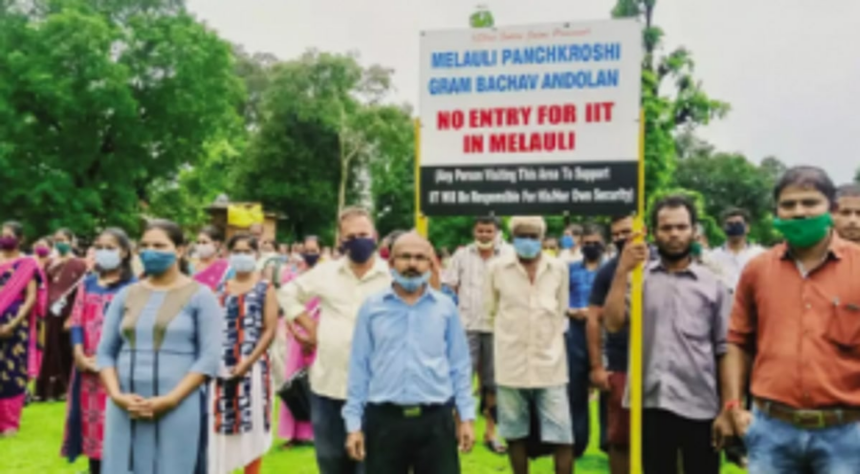
The first time was when the government decided to shift the Indian Institute of Technology from Shel-Melauli to some other site, as villagers had kept up a protest for months demanding that the institute be shifted from the location that had been approved by the government. The State, after the protests in the village turned a shade violent, finally agreed to move the IIT out of Melauli and scout for a new location elsewhere.
The amendments to the Municipalities Act, which came via an ordinance as the Assembly was not in session, had met with strong disapproval from the merchants who had even called for a Statewide closure of markets in protest, but didn’t have to resort to this as the government kept the ordinance in abeyance. Now, the withdrawal of the ordinance, however, does not end the controversy as the amendments are to be tabled in the House when the Legislative Assembly meets this week. The merchants’ association has already sought that the bill be referred to the Select Committee to enable wider consultations with the stakeholders. The opposition too has already stated that it will make a similar demand.
What the ordinance proposed was termination of the leases with the merchants after ten years and re-auction of the shops, which was unacceptable to the traders, who demanded that automatic renewal every three years be maintained. The merchants were also not in favour of the provision that permitted automatic termination of leases due to non-payment of rent or failure to renew, and argued that there could genuine reasons for non-payment of rents, and proffered examples like medical issues or loss of business. The merchants also were against the proposed annual increase in rent by 10 per cent and demand that an outer limit be fixed.
The two instances this month – shifting of IIT and withdrawal of the municipalities ordinance – send a wider message to the people that the government is turning more responsive to the demands of the people. These are small steps towards a larger goal of government and citizen dialogue. For, simultaneously, the government has not offered to taken any action on the demands of the people on the linear projects. This agitation against the double laning of the South Western Railway track, the National Highway expansion and the Tamnar power project, continues. The visit of the Centrally Empowered Committee (CEC) for a ground inspection of the three projects, gave the people some hope that their agitation could have a positive outcome.
The circumstances that led to the change in the government decisions stresses on the need for dialogue with the people on issues that concern them. In the case of the Melauli IIT land issue it became amply clear that the views of the local representative cannot be solely relied upon to gauge the mood of the people. Local MLA Vishwajit Rane, who had backed the project, was forced to backtrack on the issue and request Chief Minister Dr Pramod Sawant to shift the IIT from Shel-Melauli as the local villagers were adamant that institute would not be allowed on the land that had been earmarked.
Over the past years, we have been regularly experiencing the importance of the participatory form of democracy. The CEC that was in Goa met also the representatives of civil society besides government officials during its visit, a clear indication that the voice of the people is important. In future decisions, the government has to take the people’s views into consideration rather than forcing decisions upon them.