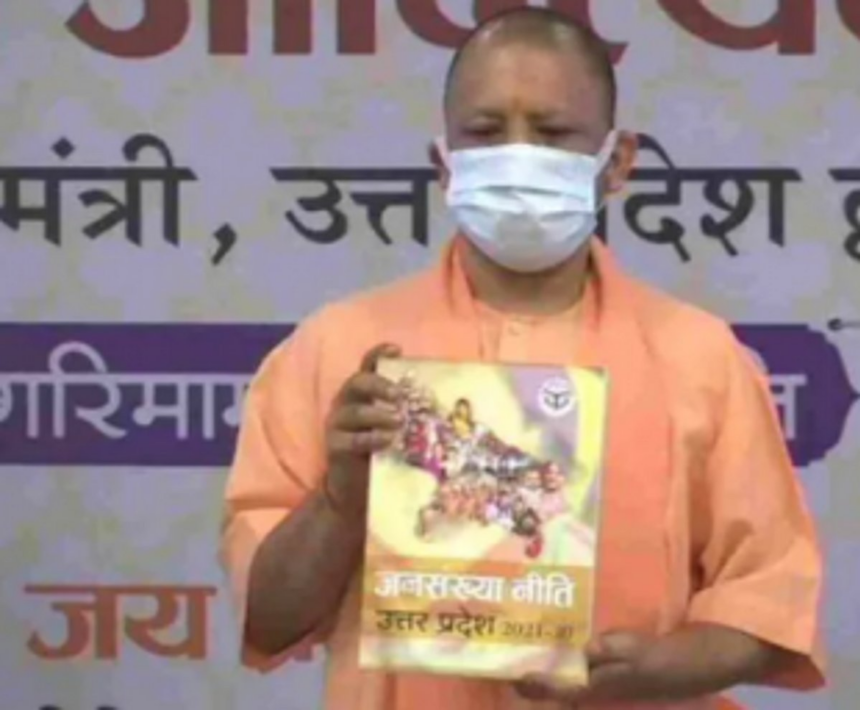
It was World’s Population Day on July 11 as it happens every year but it gave an opportunity for the poll-bound Uttar Pradesh, the largest populated State of the country, to announce its new population policy. In the new population policy, the Yogi Adityanath government has set a target to bring the birth rate to 2.1 per thousand population by 2026 and to 1.9 by 2030. The State’s total fertility rate is 2.7 currently as against the national average total fertility rate of 2.2.
As per the sample registration survey report released by the Registrar General of India in January 2019, the national birth rate average came down from 20.4 in 2016 to 20.2 in 2017, but in Uttar Pradesh it came down from 26.2 in 2016 to 25.9 in 2017. Uttar Pradesh at present stands number two in birth rate after Bihar which stands at 26.4. The birth rate in India, according to the report, has declined drastically in the past four decades. In 1971 it was 36.9 and in 2017 it came down to 20.2.
Close on heels in all likelihood even Assam during its next Assembly session starting Monday while presenting the State budget is likely to announce “two-child policy” which the Uttar Pradesh government has also mentioned. Violation of this two-child policy would mean people will be debarred from contesting local body elections, applying for government jobs or receiving any government subsidy.
India does not have a national child policy but two Bharatiya Janata Party (BJP) States – Uttar Pradesh and Assam – have taken the lead in this direction. Assam Chief Minister Himanta Biswa Sarma has been a strong supporter of the two-child policy. The government is likely to bring new legislation for this policy in the State Budget session starting from July 12.
Both, the Uttar Pradesh and Assam chief ministers have mentioned that the rapid increase in population has posed a real threat to the development of the State and is putting lots of stress on the resources available. This was a realisation during the pandemic. In fact, World Population Day falls every year on July 11 but the issue is why all of sudden raise it now?
Yes, Uttar Pradesh will be going to the polls early next year for which the preparations by political parties have already begun. Yogi Adityanath has been chief minister of Uttar Pradesh since March 2017 then why announce this policy at the fag end of the present Assembly term? In all likelihood this population policy is also likely to play a major role during the polls as the issue of Ram Mandir is now settled and the only messaging on the Mandir issue could be on its construction and name of roads and streets on those who “sacrificed their life” during the movement in the early 1990s.
Making it clear the Uttar Pradesh CM has announced that across the world, from time to time, concerns have been expressed that increasing population can be a hurdle in development, and for the past four decades discussions on it are going on. Population growth is also related to poverty. Every community has been taken care of in the Population Policy 2021-2030. However, many political parties have already started the criticism by saying that it is targeted towards “one particular community”. This blame game, in all probability, will become the main poll plank for all the political parties to harp on.
As of now India, with 1,387,807,824 (138 crore) people is the second most populous country in the world, while China is on the top with over 1,446,312,871 (1.44 billion) people. The figures show that India represents almost 17.85 per cent of the world’s population, which means one out of six people on this planet live in India.
More than 50 per cent of India’s current population is below the age of 25 and over 65 per cent below the age of 35. Although, the crown of the world’s most populous country is on China’s head for decades, India is all set to overtake China and take the top position by 2030 if proper measures to control this population explosion are not taken now. With the population growth rate at 1.2 per cent, India is predicted to have more than 1.53 billion people by the end of 2030, which is phenomenal in terms of numbers.
In no uncertain terms population explosion has been the major issue for lack of resources primarily because the growth of resources cannot match the growth of population and demand as a country will have more “mouths to feed”. During Emergency in the mid 1970s, the then Congress leader late Sanjay Gandhi had taken this issue very seriously and at times used allurement and even force for getting people undertake vasectomy but such efforts cannot be replicated now and only economic “hit” can help people understand the issue and that will come through policies which are even and fair for all sections of the society.