The bad news is, the criteria set for selecting the next CDS seems to be highly contentious and prone to cause problems in future.
The vacancy for post of CDS was created due to untimely and unfortunate demise of the first CDS, General Bipin Rawat in December 2021 due to helicopter crash. A CDS has to play strategic role for the Indian Defence Services. He is no longer a head of a particular service; Army, Navy, Air force but a combined head. The CDS has a responsibility for coordination among the three services in equipment and arms procurement, training and staffing. The CDS acts the principal military advisor to the Defence Minister on all matters related to the tri-services and military advisor to the Nuclear Command Authority. .
The mandate of the Department of Military Affairs includes, among other things, facilitation of restructuring of military commands for optimal utilisation of resources by bringing about cohesiveness in operations, including through establishment of Joint Theatre Command. He is also military advisor to the Nuclear Command Authority.
So now what is the problem here? The issue is that the Centre’s June 7 fiat has expanded the talent pool of officers eligible to become CDS to include all serving and retired three-star officers below 62 years of age is instructive in this regard. This directive has ruffled lot of feathers in the armed forces establishment.
This seems to be a flawed and potentially troublesome decision. The CDS selection process should be credible and should take into account the experience of potential candidates, their exposure to politico-military affairs, and the overall functioning of the armed forces.
But these new rules do not seem to be pointing at that direction. The government is rather inviting trouble. If a serving Lieutenant General rank officer, or his equivalent in the two other services, was made CDS he would be junior to the three service chiefs; but as CDS he would be the permanent Chairman of the Chiefs of Staff Committee (CoSC), and hence senior to them in authority.
This will cause uneasiness and affect their functioning of top military hierarchy. Under these circumstances some chiefs might even choose to resign, which would be embarrassing for the government. This is because no service chief would like to take commands from a junior ranking officer.
But despite such possible pitfalls and shortcomings, the government, for now, does not seem to be in any mood to back down or reconsider its recent guidelines for appointing the new CDS.
This strange decision taken by the administration could irreparably damage the military’s tried and tested ethos and tradition that is being followed since country’s independence.
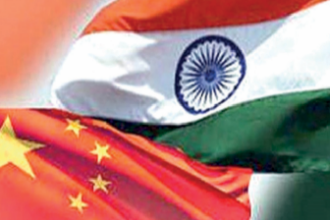
A country, which is having two hostile neighbours – on the eastern and western front and both nuclear powers – if suffers turmoil in the top military leadership, the impact on country’s national security could be huge.
A CDC is supposed to be the final authority on complex defence matters and in case of a war, he is entrusted with the responsibility of seamless coordination between all the three services – Army, Air Force and Navy – for effective deployment of troops and weapon platforms.
If there is a confusion and heartburn regarding such a crucial appointment right at the top, imagine the repercussions it would have not only just during the conflict but also while preparing for a conflict scenario. India can ill afford to have such a scenario at a time when China is still maintaining its aggressive posture towards India.