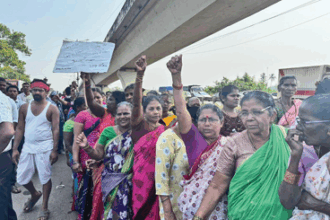
The recent judgment by the division bench of the Bombay High Court at Goa in the case pertaining to Domnic D’Souza and his wife Joan, upheld the fundamental right of freedom of speech and expression, and freedom of conscience and the right to freely profess, practice and propagate religion or form religious institutions, which are enshrined in Article 19 (1) and Articles 25 and 26 of the Indian Constitution. The Court quashed the December 28, 2022, order of the North Goa District Magistrate imposing Section 144 and banning the couple from practicing and preaching from their premises in Siolim.
The Court came down heavily on the government on the allegations of religious conversions by means of allurement or fraud, as the police could not submit any evidence to prove its theory. Though the government stated that eight cases were registered against the couple between 2009 and 2022, the Court observed that the cases have either ended up in acquittal or the police filing a ‘C summary’. To the extent, the Court observed that the case booked in 2012 was merely a case of playing loud music.
It turns out that in order to build a narrative against the couple and hand out a signal to others who are involved in religious propagation and evangelical services, the police tried to turn around the cases such as playing loud music on the lines of religious conversions.
After taking over as the Chief Minister in 2022, Pramod Sawant publicly stated that the religious conversion of Hindus stopped within 100 days in the State. This claim though lacked all factual backing and was made to strike a chord with a certain section of the society. The truth is that only two FIRs were registered between 2012 and 2022. This data was provided by the CM during the monsoon session of the Goa Legislative Assembly in July last year in reply to a question on the number of cases booked of religious conversions.
During the last two decades, a narrative is being constructed to polarise the secular fabric of Indian society on religious lines. While the colour of a bikini in a movie witnessed demands for banning a movie by none less than the ministers in governments of various states, on the other hand, a fake narrative of thousands of forceful conversions in Kerala is being promoted as true picturisation. Though rightly so, the Supreme Court quashed the West Bengal government’s decision to ban the movie and directed the movie makers to add a disclaimer that it is a fictionalised account of events.
Statistically, Goa’s population in 1961 at the time of Liberation included 60 percent Hindus and 36 percent Christians, which by the end of the century had changed in the opposite direction of what is being claimed by those who intend to promote religious polarisation. As per Census 2011, Hindus in Goa constituted 66 percent and the Christian population dwindled to a little over 25 percent. However, this is not due to mass conversions from one religion to another but due to the immigration of Hindus into Goa and the emigration of Christians from the State. The country awaits the delayed Census 2021, which would further shed light on the number of Goans flying out with foreign citizenship, especially Portuguese.
Thus, a cosmopolitan state such as Goa cannot be polarized on religious grounds, and efforts to falsely implicate people need to be fought with grit. The Indian judiciary has been a beacon of hope since the time the country woke up to life and freedom. The Constitution of India is a unique blend of religious identity and equality. Swami Vivekananda once said, “Religion in India culminates in freedom.”