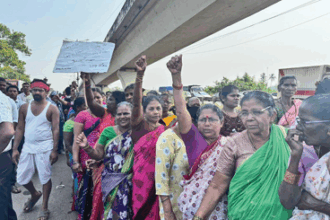
Across the State and from the entire political spectrum there are voices being raised against the manner in which the wards have been selected for reservations for the ensuing municipal council elections. The reservations that were released last week, followed by that of the Corporation of the City of Panaji (CCP), have only drawn condemnation, for being selective in nature and being worked out in such a manner that many aspiring candidates would find themselves without a seat. It has drawn the ire of not just the opposition, but in the case of the CCP, even the BJP has cried foul and has sought the intervention of the party State leaders in the matter. It is not just CCP, but the voices of protest have emerged from every municipal council in the State, and there are already five petitions in court challenging the reservations.
In the CCP for instance, 16 of the 30 wards have been reserved, which is over 50 per cent of the wards in the State capital. Besides this, the ward numbers have been changed and many of the sitting councillors find themselves without a ward to contest from. The argument that the reservations will introduce new faces is rather weak. If new faces are what was desired then the panels would just have to select fresh faces as their candidates, rather than relying on the tried and tested. This would provide a level playing field to all those in the fray. Besides, reservations were not introduced to bring fresh faces into the political system, but were meant to be a temporary measure that would be in operation until the scheduled castes and scheduled tribes that were oppressed were uplifted and integrated into society.
However, opposition to the reservations is not a new phenomenon. Delimitation and reservations have always given rise to some amount of opposition in the State. While it usually arises when sitting councillors find that they are without a ward, which could effectively end their political careers, it also creates a hurdle for aspirants who have nursed the ward for a certain period in the hope of entering the electoral fray.
The process of reservation is complicated. These are constitutional mandates, under which there is reservation for women, for scheduled castes and scheduled tribes and for other backward classes. Then there is the Goa Municipalities Act under which the reservation of wards has to be on rotation, so it is not necessary that a ward reserved for a ST, SC or OBC should have a substantial population of these. While rotation does create a sort of level playing field in the polls as there can be comebacks made by former councillors, it is how these wards are rotated that is now being questioned. Taking CCP for instance, the ward numbers have also been changed which allows the same ward to be reserved again.
The authorities have no doubt followed the law in working out the ward reservations, but the allegation is that this has been done subjectively. From a cursory glance at the final output of the exercise there appear to be clusters of a town that are reserved, while other areas are free of reservation. To avoid any such allegations the process of selection of wards has to be made transparent, wherein along with the notification the reasons for selecting a ward are also listed. This could reduce friction to a certain extent and save the time of the government that will now face court proceedings on the issue. Another suggestion is that the reservations be done by the State Election Commission and not the Directorate of Municipal Administration. If both these are considered seriously by the government, it could reduce friction to a large amount.