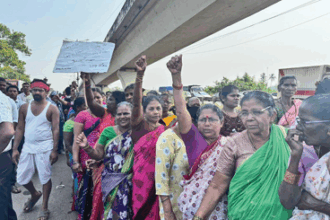
Farmer of the village of Sal, in Bicholim, have a grouse that the waters of the Tillari irrigation project do not reach them in time for their agricultural activities. They have been constantly asking that the waters be released in August and September, and not the following January as by then the crops have dried out and they have suffered losses. The delay in releasing the waters is due to cleaning of the canals and other formalities that are beyond the control of the farmers. The farmers complain that they have to regularly go on strike and demand that the waters be released on time.
While this may appear to be an issue restricted to the village, it is an example of the lack of planning by the authorities, that results in underutilisation of facilities that have been constructed at large costs. As one farmer pointed out, there is no point in the government spending so much if the project is not going to help the farmers, for whom it is meant to be.
The Tillari project, long delayed and with major cost overruns, remains underutilized and as pointed out by the farmers, there has been no attempt made to ascertain the benefits of the project and whether they have percolated down to the people. It is not enough to merely have projects, but their proper utility also needs to be ensured.
The issue of the farmers in the village of Sal is also symbolic of how agriculture has been neglected in the past by consecutive governments and needs a major booster shot if it is to grow in the State.
Just about a month ago, the Agriculture Minister Vijai Sardesai had spoken of bringing in an element of glamour into the sector as he feels it would lead to attracting more youth to the profession and into the fields where they will get their hands and feet dirty with mud. No doubt, agriculture in Goa needs to be taken to a different level, but the immediate need is ensuring that the existing farmers have the facilities required, especially the supply of water without which there can be no agriculture. The Minister had said, “At a time when farmers are committing suicide across the country, Goa government is focusing on pampering the agriculture sector.” The farmers of Sal, would probably not agree with this statement, as they see no pampering coming their way, not even water into their fields at the time when they need it.
It will require a lot of effort on the part of the government, to entice the younger generations to the paddy fields, cashew plantations and coconut groves of Goa. But first, it has to ensure that the farmers are given the facilities required, so that the youth see that there is seriousness in the plans. The government, especially the minister, has been saying that the focus will be in making Goa self sustainable in agricultural produce and double farmers’ income by 2022. That date is not too far, so time is limited for the government if it intends to meet the deadline it has set for itself.
It is a fact that the area under agriculture has been falling, though statistics may show a larger yield. This is mainly due to mechanisation and high-yielding varieties that are being cultivated. The answer to promoting agriculture lies in bringing more land under cultivation. If agriculture is not given a major boost soon, the harvest feasts, that are a tradition that the villages in Goa still maintain, may in the decades to come, be footnotes in the history books of Goa, as agriculture could give way to the other jobs and occupations.