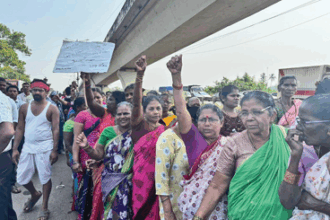
The images of cracked roads and houses have sent shivers down the spine of everyone.
Situated at 1,875 feet above sea level, Joshimath is also an important halting place for the pilgrims who visit other pilgrimage centres like Badrinath. The number of tourists has continued to increase year after year, which has provided the locals with many employment opportunities. But the rapid development also led to multiple problems for Joshimath.
According to experts, the fragile mountainous region could not bear the brunt of rampant development and the construction of roads and luxurious hotels. The buildings in Joshimath first developed cracks in the 1960s. That was the first time that evidence of cracks forming in the mountains of Joshimath surfaced. It was felt that the hill station could be dangerous for the residents.
The situation turned from bad to worse rapidly. The then government of Uttar Pradesh constituted the Mishra Committee under the chairmanship of the then commissioner, Garhwal Mandal, to investigate the reasons behind the sinking of the town. The committee submitted its report on May 7, 1976.
One of the Committee’s recommendations was that the State government should issue orders for halting the blasting of boulders. The other recommendations included developing a proper drainage system in the town to stop seepage of rainwater, avoiding digging at slopes and collecting construction material in the five-kilometre vicinity, and a ban on chopping trees to prevent landslides.
However, despite these recommendations, the construction of roads, dams, tunnels, and multi-storey buildings continued unabated. The situation is so bad now that the very existence of Joshimath is under severe threat.
The Joshimath incident is a very grave reminder that people are playing with the environment to such an extent that the entire landscape could perhaps cease to exist.
It is now impossible to undo the damage. Every day media reports are coming in, pointing towards more buildings developing cracks.
The rate at which buildings are developing cracks, it seems as if most of the terrain of Joshimath will cease to exist. The administration’s priority should be to help people evacuate and shift them to temporary accommodations. However, if we want to ensure that no other city in any other state should meet the same fate as Joshimath, we must make concrete policies.
Joshimath’s crumbling under the weight of rapid urbanisation is an urgent wake up call for other Himalayan cities and towns that have been coping with huge footfalls in recent years. Experts warn that the hills of Uttarakhand can only take so much and that many tourist destinations could be a ticking time bomb like Joshimath.
According to a report published in the Times of India, in 2017, Mussoorie had 27 lakh visitors, 30 lakh each in 2018 and 2019, 10 lakh in 2020 and 12 lakh in 2021. In Nainital, there were 9.3 lakh visitors each in 2018 and 2019, 2.1 lakh in 2020 and 3.3 lakh in 2020. Not accounting for the sharp drop in tourists during the pandemic years (2020-2021) the data shows a steady boom in tourists at these destinations.
Rampant construction with disregard to rules in the hills has often been flagged by environmentalists but these words of caution fall on deaf ears while the authorities look away. As a result several hill stations in India are collapsing, perhaps not literally like Joshimath yet, but the strain from water crisis, garbage disposal, illegal buildings and forest depletion are already visible.
While hill stations undoubtedly thrive on tourism and better infrastructure like development of roads and bridges are crucial for connectivity – all of this needs to be done sustainably and with long term planning.
Water crisis, endless traffic jams, toxic vehicular pollution, mounds of litter, unchecked development and ad hoc construction are turning India’s touristy destinations into unsustainable habitats. Uncontrolled development can be seen in hill stations like Dehra Doon, Gulmarg in Kashmir or Gangtok in Sikkim. Builders of large resorts and small hotels on hillsides flout environment norms.
Shimla is a victim of progress. The largest catastrophe to strike Himachal Pradesh and Uttarakhand is the mammoth water crisis in its hill towns.
Darjeeling, which was famous for both tea and lush glory, is now a concrete jungle, stifled by tourist traffic. To make space for SUVs, picturesque walkways have been widened to make concrete roads in all hill stations.
The entire Joshimath episode is telling us loudly to get our act together and save our hill stations by regulating human population inflow and strictly follow the environment regulations. Otherwise be ready for a series of disasters to strike us very soon.