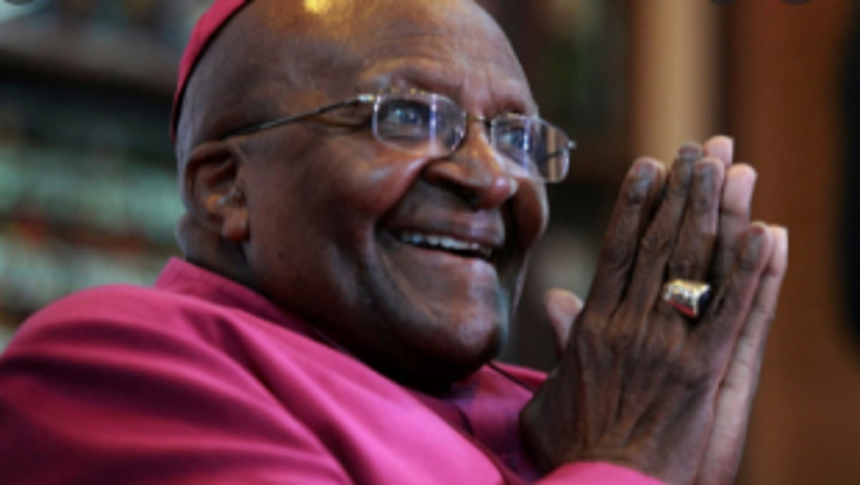
The death of Anglican Archbishop Desmond Tutu comes just weeks after the country’s last apartheid-era president F W de Klerk breathed his last. Along with Nelson Mandela, the tallest figure of the anti-apartheid movement, Archbishop Tutu was the most recognisable face of the movement, an individual whose picture was on the front pages of newspapers across the world and whose interviews were broadcast on television channels in all countries. His face was not just recognisable in South Africa but in countries in all continents and not just the African continent. The position he took against apartheid firmed his place in the history of South Africa and its movement again racial segregation.
His death was also reported across the world, and brings to an end an era that South Africa will long remember, along with recalling the contribution of such personalities like Tutu, Mandela and others in ending that period. They were the ones who took the country from the apartheid era to one where racial segregation and discrimination enforced by the then white minority government against the black majority in South Africa from 1948 to 1991 was ended permanently. If not for them, South Africa may have had to wait for longer for the end of this era in their history. Tutu led the fight from the front, never afraid to challenge the regime of that time, never worrying about the consequences to himself.
As Bishop and later Archbishop, Tutu effectively used his position and spoke out against apartheid and drew the attention of the world to what was occurring in his country. Mandela was in prison, his wife Winnie was leading the movement outside, and Tutu was the one who, as Archbishop, got the world to listen to the oppressed black people of his homeland. He travelled to countries as the other leaders remained in prison or could not travel. He never sought political mileage from the movement he was such a central part of, and stressed that his motives were always religious and for peace. In the end he achieved what all of South Africa wanted and what the world looked forward to seeing occur – the abolishment of apartheid.
In the post-apartheid era Tutu still remained vigilant of the government and a critic of the African National Congress administration. His principled stand would never waver just because the country was now governed by the local majority group and for which he had fought, sacrificed and for which he had even won a Nobel Peace Prize. The prize was for his non-violent approach to end white minority rule and came long before apartheid actually ended and possibly gave the movement the impetus it required as the world took note. Even after his retirement that came about a decade ago, Tutu continued to be the moral voice of the nation, often castigating the government for what he felt was being done wrong. In that he never hesitated.
Along with South Africa, the world mourns the death of Archbishop Tutu. His funeral later this week is expected to be attended by world leaders. That is how important a figure he has been. Diminutive in stature, his larger than life image will, for long, be remembered and so too his contribution to the cause in South Africa. His voice has now been silenced, but as long as he could, he used it to end discrimination and to point out wrongs. The former Archbishop of Cape Town has gone to his eternal rest. His outspokenness should serve to teach the world that a single voice can serve to make a change. Tutu will live in the hearts of his people for long.