It is always going to be a challenge for the government to strike a balance between basic financial infrastructure and public infrastructure as it has a direct impact on the people’s welfare. Financial infrastructure includes public transport, communication facilities, energy system, economic growth and other facilities required for development. On the other hand, public infrastructure includes education, healthcare, housing and other services necessary for the welfare of the people. The government is required to find a balance between both forms of basic facilities to see that the development is fulfilling the needs of the people, while also promoting economic growth.
While the economic background of every citizen inevitably varies, the government must stress on enabling the access to healthcare and education for every citizen. Although not instantly, the benefits to the state in the long run could be seen when public facilities are prioritised. Hence, the investment in public facilities should not be ignored. More often than not, the expenditure on financial infrastructure is more than on the public facilities as the results are instant. Therefore, the government may be tempted to focus more on short-term projects. However, investing in long term projects such as new schools or hospitals will have a more significant impact on the welfare of the common people. And so, the government should simply focus more on investing in long term public projects.
Another effective way to strike balance between financial and public infrastructure could be public-private partnership. Private companies could invest in financial infrastructure while the government could prioritise basic public facilities. This point of view could help in making sure that sufficient funds are available for both kinds of basic infrastructure and hence, the government should put in efforts to initiate projects on PPP basis wherever ideal. The State government established Goa Investment Promotion and Facilitation Board (IPB) nearly five years ago to promote investment in the State. The Board’s objective is to provide space and other facilities to the companies from various sectors with the goal to bring in investments worth Rs 5,000 crore. Around 13 lakh square metres of land has been made available specifically for the respective purpose.
The Leader of Opposition Yuri Alemao has accused that the government has managed to bring in projects worth only Rs 726 crore so far. He has also alleged that the government which promised to give 17,000 job opportunities has reached the mark of only 1,000 jobs. The government will have to clarify the statistics. In terms of basic infrastructure, the different regions in the same State may have different needs and so, it is a very important duty of the government to take into consideration the regional inequality. Regional inequality plays an important role during allocation of the resources. For example, regions with high poverty rates may require more investment in public infrastructure. Public participation in the decision making in regards to public infrastructure is a must. The locals from the specific region would know better about the facilities which are required in their villages. This also allows people to have a say in how and where to allocate the resources depending upon the needs of each region.
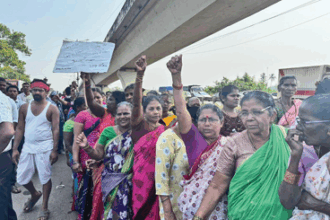
The government can convene public meetings on village, taluka and the State levels to receive feedback from people or can also opt for an online survey method. However, that does not seem to be the case which is why the government has to frequently face opposition from the people. Enraged agitations against Borim bridge or the highway expansion through Bhoma village are two of the well-known examples.
In the end, striking a balance between financial and public infrastructure proves to be testing for any government. Therefore, the government has to keep a vigilant eye on its coffers before taking any decision. The pre-calculations of inputs and outputs before spending on the infrastructure is ideal. In short, the government can achieve the balance between financial and public infrastructure by adapting PPP, public participation, consideration of regional differences and investing in long-term projects.