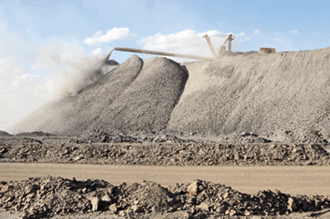
Almost three years after mining operations in Goa were summarily shut down there appears to be no corresponding increase in the tonnage of agricultural produce from the State. Over the past months there had been reports from across the State, especially of those living in the mining belt, that many of those who had depended on mining for their living had now turned to agriculture, ploughing the lands that had been kept fallow and reaping a harvest of grain and gain. But the government statistics don’t bear this out. Ironically there has been a marginal decline in the paddy crop in the State, a fact that came up for discussion in the Legislative Assembly last week.
Admitting that paddy production did drop marginally from 1,89,760 tonnes in 2013-14 to 1,80,754 tonnes in 2014-15, Agriculture minister Ramesh Tawadkar said that mechanization in the sector will be given a boost in the coming years that would in turn increase production. He also announced a survey of fallow and khazan lands in the State that could be utilized for agriculture. The decline in paddy production has been attributed to the rise in vegetable cultivation that is more turning out to be more profitable to the farmer. But, even here the improvement has again been almost insignificant. In 2013-14 vegetables produced totaled 80,511 tonnes, the figure came down to 79,920 tonnes in 2013-14. It witnessed a growth of just about 2,000 tonnes in 2014-15 with the production of 82,001 tonnes of vegetables. One crop that is doing well is chilli that is grown in Goa and is even being sold in other States.
Though the decline has been marginal, it is a cause for concern and mechanization may not be the only answer to declining agricultural production. It is the mindset of the people that has to change, a change that will lead them back to the fields. While Goa is keen to maintain its traditions, especially when it comes to celebrating its feasts and festivals, traditional occupations are being set aside for other more lucrative jobs.
Take for instance the tradition of the harvest festival that is celebrated across the State in August. When it comes to celebrating this festival it does not seem to matter that this year the monsoon is showing an alarming deficit and that agriculture is not showing any rise in produce. Villages across the State are gearing up to celebrate the harvest festival, cutting paddy sheaves in a ceremonial gesture even as agricultural fields in the villages are quickly sprouting concrete buildings rather than long-stemmed paddy sheaves.
The village of Raia in Salcete has already held the harvest festival last week and didn’t spare any of the traditional ceremonial trappings, except allowing the Assistant Parish Priest, rather than the Parish Priest to cut the first sheaves of paddy and bless them. Situated on the outskirts of Margao, Raia remains today a village administered by a panchayat, but for the 2011 population enumeration exercise it was designated as a census town, the prime reason being that agriculture is no longer the main profession of the adults in the village. A quick drive through the village will take you past number of fields that have not been cultivated, yet the village has not set aside its harvest festival, celebrating it in the manner in which the elders of the village did when all the land was tilled.
Agriculture has not been the main profession in this village for quite a few years now and this is a trend that can be seen across the State. It is not restricted to Raia, and very soon Taleigao and Divar, among other villages, will be celebrating their harvest festivals in villages where very little land is used for farming and where the produce would possibly not fill even one large granary.
Development has been changing the way Goa looks at itself, though age-old customs such as the harvest feast still hold a major place in the village as Goa strikes a balance between modernity and tradition. Yet, the day may not be far when the harvest festival in a village may have to be celebrated without the cutting of sheaves.