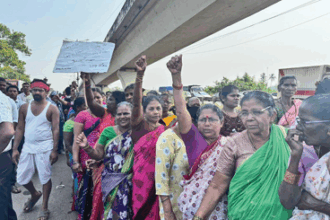
The pictures and videos of convicts being given hero’s welcome by garlanding and feeding sweets have gone viral on social media. In any case, the guilty cannot be backed and glorified. Criminals should be rehabilitated but not sublimated. The respective case had to be transferred out of Gujarat to Maharashtra which should give one the understanding of how sensitive it was and continues to be. It’s a collective shame that the unsafe environment continues to exist there for all those who celebrated the nation’s 75th Independence Day not many days ago. There is a high possibility that this will set misguided precedent to consider life imprisonment lasts for mere 14 years. In a case from 2012, the Supreme Court had made it clear that life sentence means the imprisonment till the criminal’s death.
The bench of Justice K S Radhakrishnan and Justice Madan B Lokur had stated that there is a misunderstanding about prisoners serving life sentences having the right to leave the cell after completing 14 or 20 years of their punishment. Prisoners do not possess any such rights. The one serving life sentence must spend his entire life locked up in the cell until his last breath. As per the Code of Criminal Procedure or commonly called Criminal Procedure Code (CrPC) Section 432, a government can forgive or reduce a convict’s penalty and release him before completion of the sentence. However, according to Section 433, the government in question cannot reduce life imprisonment until and unless the convict has served 14 years in prison.
Under general circumstances, the government takes into consideration certain parameters regarding the convict such as convict’s family’s socio-economic background, his health status, behaviour during the sentence, capacity of committing crime and possibility of rehabilitating him to be a useful member of the society all over again. And hence, the real question that needs to be addressed is based on what criteria the Gujarat government has taken this controversial decision. The government should be made to make their stance clear. As per the Central government’s Special Remission Azadi ka Amrit Mahotsav policy, it was decided to release convicted women and transgenders criminals, male criminals above the age of 60, handicaps and the ones who had served half of their sentence.
According to the new policy, the convicts charged with rape, terrorism, dowry, life imprisonment, death penalty, and human trafficking are not eligible to be released. The ones incriminated under The Explosive Substances Act, the National Security Act and anti-kidnapping law are not eligible to be benefitted from this policy either. Therefore, the Gujarat government’s decision based on the outdated law despite the new amendment being in effect has come under rightful criticism. The 11 convicts in Bilkis Bano’s case were sentenced with life by CBI’s special court in 2008 although they were in the prison since 2004. The convicts were found guilty of gang rapping Bano who was 5 months pregnant at the time, mercilessly beating her 3-year-old daughter to death and killing 7 other members of her family during Godhra riots. Although the Gujarat govt has prematurely released the convicts, the nature of their crime is not pardonable under any policy.
The Gujarat government used two sections of CrPC for their acquittal; Sections 433 and 432. Under these sections the respective State governments can change convict’s death penalty into any other punishment. Also, the life imprisonment can be remissioned after the guilty completes 14 years in prison. The government can also change severe punishments into fines or imprisonment which is simpler in nature. The question whether the old law stays in effect even after the new amendment has been implemented remains part of an in-depth legal analysis.
The estrangement between the two communities simply cannot be overlooked when one is breaking down the episode of Gujarat violence. The possibility to coax one community by frightening another is exceptionally real. There are nationwide elections scheduled to take place next year and there is no issue at the moment which is emotionally stirring. And hence, the tricks to camouflage people’s attention from real issues has begun from Gujarat; the heavy price of which the whole nation will have to pay.