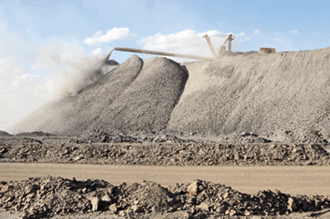
In Goa, terms like ‘clean shave’ and ‘close crop’ don’t seem to refer to personal grooming styles alone. With the hills being systematically scalped by unscrupulous elements, the State’s once verdant landscapes and bountiful ecosystems are certainly on their way to being beheaded altogether.
Land is a limited resource, more so in Goa which is bounded by ocean on one side and hills on the other. Once sparsely populated, the eventual tourism boom saw almost everyone – local residents and non-Goans alike – jostle for at least a sliver of the sunshine State’s real estate pie. Soon enough, there was a development boom to cater to a burgeoning tourism sector, particularly along the State’s picturesque coastline.
When buildings sprung up cheek-by-jowl and land in these areas became scarcer and scarcer, people chose to move inland and lay their hands on farmlands. Rampant land filling ensued, and continues to this day, as land sharks prey on uncultivated fields and do anything and everything in their power to ensure that towering structures with multiple wings replace the golden ears of paddy that would once sway in tandem under the October sun.
It’s not like this metamorphosis was not aided and abetted though. Several ‘amendments’ to the once austere Town and Country Planning Act have allowed for rampant conversion of land use, with certain no-development areas being declared fit for construction virtually overnight.
With fields in most parts of the State being steadily levelled for big-ticket projects, it was only a matter of time until sights were set higher, towards the hills. Over time, the crowns of many such verdant landscapes have been replaced by wide roads, residential complexes, shopping plazas, and the like. The rampant scalping of hills and plunder of the rich ecology they are home to have now become commonplace, with the consequences being felt the most during the monsoon when a slighted Mother Nature bears down by way of landslides, sweeping away anything and everything in her path.
Following the catastrophic landslides witnessed in Kerala’s Wayanad recently, Chief Minister Pramod Sawant said a report on landslides in Goa prepared by an expert committee would be perused, and construction permissions issued for hill slopes would be cancelled if needed. He further put the onus of informing the authorities concerned about hill cutting incidents squarely on the shoulders of the talathis. With this diktat, talathis will have to monitor hill cutting and buildings coming up on slopes – particularly in the villages of Sanguem, Quepem and Canacona – and inform the district collectors concerned of illegalities, if any.
“We were a bit slow in our work, but now we will go ahead at full speed,” he is reported to have told the media earlier this month. But, if the CM genuinely wants to tackle this menace quickly, the powers-that-be in government should themselves identify and act on instances of rampant hill cutting without waiting to be informed by bureaucrats and lower-level officials. When it comes to saving the environment, red tape should be avoided totally, because despite courts ordering errant developers to ‘restore the land to its original condition’, the damage inflicted on flora and fauna is almost always irreversible.
Also, since the most blatant cases of hill cutting are usually carried out by the powerful builder lobby, most ordinary citizens would think twice about reporting such instances for fear of backlash, threats and the like from such developers. This is even more the reason why the government itself should step in and curb the menace, if it is, in fact, truly dedicated to doing so.
Otherwise, it is only a matter of time before our precious hillscapes disappear and its effects felt during the monsoon, when we are tormented by crashing boulders and sweeping landslides.