The Council for Social Justice and Peace has raised one of the most significant and relevant issues concerning the Regional Plan which underscored exactly what is wrong with the planning process. The CSJP, a very important arm of the Church, has called for the urgent and immediate amendment of the archaic Town and Country Planning Act of 1974.
A weak and a very outdated act has left the issue of participatory planning to the mercy of the government with multifaceted vested interests, rather than at the mercy of the law. The betrayal of the government in ensuring real participatory planning is obvious. As CSJP has pointed out, “the recent move to open the RP-2021 for public suggestions appears to be more of an excuse to accommodate land use changes by appearing to give the impression that the planning is participatory, transparent and accountable”.
The reason why the government is getting away with this is solely because the outdated TCP Act has no provision for participatory planning by local rural bodies. This Act was formulated in 1974 while the 73rd and 74th amendment which gave constitutional status to panchayats was enacted only in 1991. This resulted in the Goa Panchayati Raj of 1994. Here, one must add that the past Congress governments are as much to blame as the present BJP government. If the TCP Act of 1974 was amended in 1994 when the Goa Panchayati Raj came into effect, then sending the Regional Plan to the villages for a final vetting would be a legal and not a political necessity. The amended Act would have made it mandatory for the TCP to involve the panchayats at every step in the Regional Plan formulation and enactment.
What is happening now is shallow lip service of participatory planning when in reality it is exactly what the CSJP has said, an excuse to accommodate land use changes.
However, different panchayats and groups have raised this earlier during the formulation of RP 2021. The erstwhile ‘advisor’ to the Pilerne Citizens Forum, Adv Yatish Naik had written several letters to the TCP on this issue. In his present avatar of GPCC secretary and spokesman, he is fronting the Congress’ attack on the government’s failure on the Regional Plan. But he would be well advised to encourage his own party in admitting its failure, deliberate or otherwise, of not amending the TCP Act in the nineties when it was in full power and there was no BJP or Manohar Parrikar in the horizon of governance, If the Congress has apologised for allowing casinos on the Mandovi river, it should also apologise for not amending the TCP Act, which affects Goa far more significantly.
However, while the Congress needs to atone, the BJP needs to hang its head in shame for firstly insulting the august Assembly, which is the House of the people, and secondly the people themselves. On March 20, 2012, the assembly voted to pass the then Goa Governor Mr Kateekal Sankarnarayanan’s inaugural address to the new Assembly, where he said that the current Regional Plan would be ‘de-notified’. When the Legislature passes the Governor’s address, every word of it has sanctity higher than a cabinet decision. This sanctity has been breached by the BJP government.
Secondly on July 24, 2014, Fatorda MLA Vijai Sardesai reminded then Chief Minister Manohar Parrikar, on the floor of the House, of the Governor’s address and the Assembly’s endorsement, through voting, of the same. Mr Parrikar’s reply was, “I have not denied it”. In reality though, his government and that of his successor Mr Laxmikant Parsekar, have denied the people of Goa, the benefits of a people friendly decision its government promised, the decision to do away with a prejudiced, builder lobby friendly plan and replace it with a peoples plan.
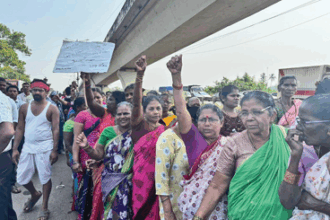
This is a fit case for the people of Goa to once again agitate and bring to light the utter manipulation and betrayal of the Government of Goa.