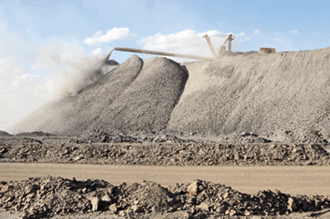
In light of the severe pollution in Delhi and the related problems it is causing, it is pertinent to act to stem the possibility of a similar situation from ever occurring in Goa. There has been enough evidence that coal handling at the Mormugao Port Trust has cloaked the town of Vasco with a layer of dust, leading to breathing difficulties and other health issues arising from the dust. The monitoring conducted by Goa State Pollution Control Board has also found that the particulate matter in the air was far higher than the permissible level, though the monsoon later brought this down. The residents of the town, and those on the transportation routes, have taken up the issue demanding that the handling of coal be stopped in the State.
There is no denying that pollution levels in Goa have increased over the years, and it is also not just coal or iron ore mining and transportation that are the only or the main reasons for pollution in the State. Pollution is due to many factors, and this needs to be tackled now, rather than waiting for it to engulf the State, in the manner that Delhi has been choked.
It is perhaps time to take a leaf from the manner in which the National Green Tribunal has reacted to the petitions before it regarding the pollution in Delhi. For one the tribunal has refused to exempt two-wheelers and women drivers from the odd-even rule that permits vehicles with odd numbers to ply on certain days of the week and vehicles with even numbers to ply on other days. This is done for that the streets of the National Capital have fewer vehicles on the roads. The tribunal has also ordered that diesel vehicles that are older than 10 years be taken off the roads immediately. These two points in the Tribunal’s order need to be considered by the administration in Goa, as the State could someday be led to take similar decisions, if steps are not taken today to keep pollution levels below the permissible levels.
Admittedly, most of the pollution is from vehicle fumes. Traffic on the roads is increasing steadily, with the number of vehicles growing. As pointed out in Herald, in Margao itself over 40 new two-wheelers take to the streets daily, adding to the traffic and the fumes of fossil-based fuels – carbon dioxide. The State does not have the kind of traffic that Delhi has, but vehicles in Goa are not just filling up the streets of the towns, but also leading to air pollution through the release of fumes. Admittedly, the pollution levels in most Goan towns is within limits, but it is better to ensure that these limits are not crossed, rather than having to take drastic and emergency measures when the pollution level crosses the permissible limits.
There are proposals to convert the public transport system to bio fuels and the possibility of going green is already being experimented on a pilot basis, with selected Kadamba Transport Corporation buses running on the bio fuel. But the State needs to take a few steps ahead and plan for a proper, systematic transport system that will reduce the number of private vehicles on the roads and so help the State bring down its carbon footprint.
This could also be Goa’s contribution to the global battle to combat carbon dioxide emissions and contain the changes in climate. Currently the United Nations Climate Change Conference is being held in Bonn, Germany and it was revealed here that transport contributes about a quarter of all energy-related carbon dioxide emissions and about 15-17 percent of the entire spread of human carbon dioxide emissions. This, then, could be the right time to take a call on reducing pollution levels caused by humans.