There can be no disputing that. The elevation of a tribal woman from a remote tribal belt of Mayurbhanj in Orissa to Rashtrapati Bhavan, is in many ways a testament to India’s pluralism and diversity.
At the same time, a fair and honest assessment of the choice of Murmu (which needs to be commended and isn’t a subject of debate) is only possible if we look at the ratio of symbolism to ground reality. On one hand, the appointment signifies not just representation but handing over supreme leadership to the most impoverished and marginalised sections of our society. But isn’t an admission of their marginalisation itself a reflection of India’s failure as a free, independent, and proud republic?
In this very month when Draupadi Murmu became President-elect and then President Murmu, Rampyari Bai, the 45-year-old tribal woman in Madhya Pradesh was set ablaze in Guna district over a land dispute while the killers filmed her getting burnt. She later succumbed to her burns. She belonged to the Sahariya tribe identified as a Particularly Vulnerable Tribal Group (PVTG).
If President Murmu’s elevation can stop the shame and horror of any more tribal (or for that matter any other marginalised and weak Indian) from suffering the fate of Rampyari bai, India will be in a better place.
But this is an extreme case and while these extreme cases are almost normalised in some places with the justice system failing victims, India’s tribals need development interventions and basic help to remain afloat in our socio-economic system.
Schools have to be comfortable and affordable for tribals. Some sections of grassroots media and rural reportage-based NGOs and writers like P Sainath have kept the narrative of rights of tribal and marginalised, alive.
But change is slow. In 1995 Sinath wrote a seminal book Everybody Loves a Good Drought, stories from India’s rural hinterland.
Over two decades later, Outlook magazine visited Alirajpur in Western Madhya Pradesh, where Sinath had gone and reported. “The tribal-dominated district has the lowest literacy rate (37 per cent) in the entire country. Since 2010, the Right to Education Act has made education free and compulsory for all. However, the number of students enrolled in primary schools in the district has decreased to 2,100 schools,” Outlook wrote.
Broadly the broad problems faced by our tribals are – loss of control over natural resources, lack of education, displacement and no rehabilitation, problems of health and nutrition, gender Issues, and erosion of identity.
In the 2016 report of the Ministry of Tribal Affairs (this day would have been updated but gives an indication), tribals are behind other social groups on various social parameters, such as child mortality, infant mortality, number of anemic women.
The gross enrolment ratio among tribal students in the primary school level has declined from 113.2 in 2013-14 to 109.4 in 2015-16. Besides, the dropout rate among tribal students was increasing.
The report also highlighted the gap in the rehabilitation of tribal community members displaced by various development projects. “Out of an estimated 85 lakh persons displaced due to development projects and natural calamities, only 21 lakhs were shown to have been rehabilitated so far,” (2016) the Report states.
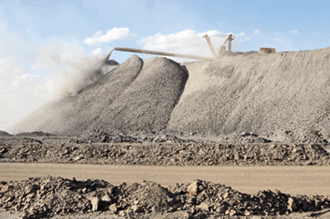
Coming to President Murmu’s home state Orissa, Sudhir Pattanaik, Odisha-based social activist and Editor Samadrusti told The Hindu in an earlier report, “Mining plants and captive power projects have been set up in the past several years in Angul, Koraput, Raigadh and Kalahandi districts in the State. It was tribal land acquisition and not tribal development that was the focus of the government. Rehabilitation only happens on paper, and any compensation for displaced Adivasi folks is siphoned off by others in their name,” he said.
Chattisgarh has been another hotbed and nerve centre of the tribal conflict with the mainstream. The Naxalism and Maoist activity linked to terrorism narrative, without going into the merits of the narrative, has painfully buried real issues of tribals that need to be addressed for their very survival.
Here one would expect empathy from the highest office of the land.
Our indigenous brothers and sisters do not need ingenious planning for their rightful place in our country. They need understanding and, to use that word again, empathy.