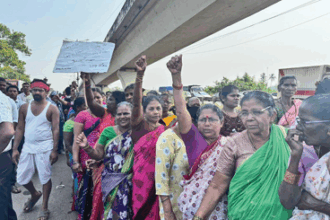
Their demands were a motorable road, regular power supply, potable water supply among other needs. Even the attempt by election officials and the politicians that their demands would be looked into after the polls, did not succeed in getting the villagers to change their minds, and they stayed away from the polling booth. While those were the listed demands, villagers said that they no longer trust the politicians, who reach out to them only during the campaign with promises, and then disappear from the scene, the promises remaining unfulfilled.
The boycott of elections was not peculiar to this village in Canacona. Villages in Uttar Pradesh that are hit by drought and not receiving any relief from the government have threatened to boycott the polls. West Bengal too saw villages staying away from the polling stations, and in Odisha hundreds did not vote on Monday’s fourth phase of polling for various reasons. The people of India have found a new form of protest – non-violent – which is to stay away from the polling booth. It is still early to gauge its effectiveness in terms of getting the issues addressed, but surely it has taken these villages and their problems to the media.
The boycott of polls is not a very new method of protest, but these elections it has grown. It may be scattered across the country, but it could grow in the future. There are, however, various issues here, one being the existence of the NOTA – none of the above – option that is available to the voters. One can well ask, when there is the option to press the NOTA button on the electronic voting machine, does a poll boycott succeed in getting the polity to make the difference? No doubt it gets media coverage and the issues get spoken about, but will the elected representative get down to finding a solution to the problems that those who boycotted the poll face?
Another issue is of whether by willfully refusing to exercise their right to vote the people are turning their back to democracy and at the same time allowing a candidate of a choice of a lesser number of people to win the polls.
The adage that bad people are elected by those who don’t vote, does come into play here. So are the people doing the right thing by boycotting polls? On the other hand, if a group of MLAs or MPs can walk out of a Legislative Assembly or a Parliament before a vote is taken, or even abstain from voting when being present in the House, why can’t the voters boycott an election to bring their grievance to the notice of the polity and the administration that is otherwise unreceptive to them?
The main issue here is the trust deficit that is coming to exist between the voters and the political class. Like the voters of the village in Canacona said, they no longer trust the politicians. Unless the elected representatives begin to deliver and keep their promises, this deficit will widen.
At the present time, the number of people boycotting is small and may not make a difference to the result, but should this grow, then it can have a ruinous effect on democracy, as it can allow a certain section of the political class to increase its numbers in the House. There have been instances of this elsewhere in the world.
What can change this is a more responsive polity and government, that is attuned to the needs of the people. If the elected government delivers, there will be a change in the manner in which the people think, which in turn will strengthen democracy.