The dumping of controversial projects in the name of development in the State have met with stiff resistance from villagers.
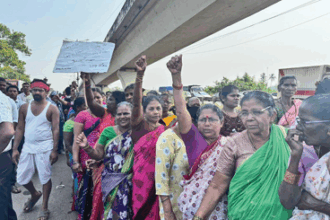
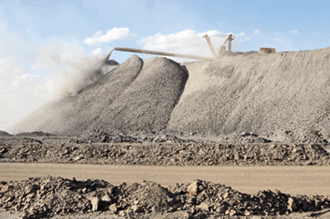
Local residents have been hurt and battling the issues as they have lost their only source of livelihood and displaced from their ancestral land. Mayem locals are fighting against the transportation of iron ore, Shirgao locals are demanding omission of Lairai temple from mining belt, Mulgaon locals have opposed the mining itself, Bhoma locals are against the expansion of the highway that passes through the village, Cuncolim residents are fighting pollution, those affected by coal transportation are opposing the same, Velsao villagers continue to battle the double tracking of railway lines, and Borim-Loutolim locals have stood up against the new proposed bridge. Although environmental damage, fear of loss of natural sources of livelihood and displacement are the common causes behind all the aforementioned protests, these fights are being fought independently and not collectively. The strength of a collective fight in a democratic country is immense and so, it makes it difficult for the government to diffuse such opposition easily.
There are multiple examples in history which is why the rulers are always trying to make sure that the parties with similar interests do not get unified. Unfortunately, the local leadership falls prey to such schemes and eventually the court remains as the last resort after the protest loses its intensity. Many such petitions are still pending with the Bombay High Court at Goa. NGOs which are also with people in such matters, fight their own battles independently. As a matter of fact, the fight to protect the environment should not be restricted to a particular village or a settlement because the damage to the environment does not affect only one village. The nearby areas too, face the brunt of it for many years. Therefore, the people should feel that those fighting to preserve forests, land and water are fighting a common battle for everyone. This includes the people who belong to the upper-middle class as well.
Infact, the battles to preserve the Earth did not begin just yesterday but such conflicts have been going on for the past hundreds of years. The bloody sacrifice from the Bishnoi community from Rajasthan in 1731 to save their trees against the dictatorial rule is considered as the first collective fight in the country. The king’s soldiers killed 363 Bishnois who refused to leave the trees which the soldiers intended to cut down. Abhai Singh of Jodhpur had decreed to fell some trees from the jungle of Khejarli so that the wood could be used to build a new palace. When the king’s delegation reached the area, a local woman named Amrita Devi tightly hugged the tree which would have been felled first and refused to leave it. Soldiers ordered her to move aside but instead, she stated that her beheading would be cheaper than felling a tree. The royal delegation then killed her and her three daughters. The news spread like a wildfire in 84 Bishnoi villages and hundreds of villagers hugged the trees in their areas as a way to protest the deaths. The soldiers mercilessly killed the people as continued to cut the trees as well. By the time news reached the king, 363 people were already murdered. Abhai Singh apologised for the incident and subsequently withdrew the mission immediately. The intensity of this massacre and ultimate devotion towards protecting the environment inspired several future protests in the country. Sundarlal Bahuguna’s Chipko Movement which started in Western Himalayas and continued with Tehri Dam protests, Save Silent Valley movement in Kerala and the most recent Narmada Bachao Andolan led by Medha Patkar were all fought collectively by people. The ruling factions always accuse the protestors of disrupting the flow of development and also cite them as the reason for common people staying deprived from the development. However, the government’s development policy which is capitalist-centric does not prioritise the wellbeing of those who are at the lowest rung of the society. It takes a long time for the ones at the last step of the ladder to be benefitted by the prevailing development schemes, let alone the government accepting the policies to adopt sustainable development.
There could be various opinions over how alternate options of development could be adopted and it is also true that coming up with such alternatives is not easy. Because there is a huge gap between what we desire and what is the current situation in relation to social, political and economic fabric. However, the alternative development policies could be drafted by prioritising security and assurance of livelihood to those who are deprived of it. The security of livelihood does not mean mere daily bread but a content and respectable life. Although it is factually true that mining brought revenue and employment in Goa, it should be finalised for once and all how much more this tiny region would be drilled and grinded. The development policies should consider least possible felling of trees, displacement and think about how the sources of livelihood will remain intact for the future generations. It is agreeable that no development is possible without damaging the environment at all but the rulers must determine the policies by balancing the immediate benefits as long term consequences of the development plans. And for that to happen, the public pressure should be collective and not fragmented.