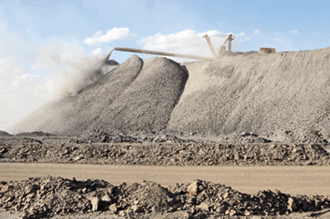
The find of multani mitti in the iron ore tailings at Sankhali should be considered as a historic one. Goa has been known worldwide for manganese and iron ore minerals and the new find presents an opportunity for the State to be known for multani mitti too. Since this unique soil has been found at one place in Goa, it should be searched whether it is present in other parts of the State too. One may wonder if this particular clay has anything to do with the city of Multan which is in Pakistan and the answer is yes.
Multan was part of India around the 18th century which is when the people of the city realised its various qualities. Later on the itinerant merchants started to sell the multani clay on the other side of India. The qualities of multani mitti were written about in the ancient texts which led to its extensive research and wide usage in various industries. This very clay was used to restore the changing color of Taj Mahal’s marble which holds archaeological significance. Centuries later, multani clay has become a household beauty product for many. Multani mitti contains high amounts of minerals, especially aluminium silicate. This clay possesses incredible capacity to absorb which helps in tackling acne, pimples and oil removal. The regular use of multani clay is a widely prevalent skin-care practice. Given its numerous uses, its find in Goa should be considered as a big deal.
Although the government has made a start by granting the lease deed, a long journey still lies ahead. The government cannot merely grant the lease and wait for the private businessmen to do something. The government should ponder whether it is possible to start a sales business selling multani clay powder in packets through women self-help groups. If that takes off, then it would add a feather in the government’s cap with regards to their flagship programme of Swayampurna Goa.
Since the clay was found in the soil, the State has authority over it. The general public’s right over the clay has to be accepted as the State is its owner. A public sector of the multani clay industry can also be set up and if the government thinks of it as inappropriate, then the authorities should at least encourage the self-help groups to do so. Only then the efforts towards Swayampurna Goa could be considered as honest. It might be asked how multani mitti could be found in a mining area and for that one needs to understand what multani mitti really is. Called Fuller’s earth in English, its properties include magnesium, sodium and calcium. Fuller’s earth is a type of hydrated aluminium silicate and apart from montmorillonite, it also contained essential minerals like attapulgite and pelagorosite. Rich in various aforementioned minerals, multani mitti helps in removing the dead skin and also battles blackheads. Hence, it was expected to be found in the mining belt itself.
Doubts over what is hidden in Goan soil has been expressed multiple times before to an extent that even the claims of gold being present in the State were made. Now with the discovery of Multani clay, the claims of gold being present in Goan soil, even in negligible amounts, seems to be factual. Multani mitti is more or less used in cosmetics and pharmaceutical products which makes it a valuable asset. Hence, the government should appropriately use this wealth found in the form of soil. The discovery of multani clay hints that the Goan soil has many hidden truths which should be unearthed. If multani clay is found in large quantities then the State could very well set-up industry for manufacturing cosmetics. The discovery can be considered as historical and memorable only if the government realises the potential it has in generating employment opportunities.