The demand made by the Goa State Pollution Control Board of mining companies, of a bank guarantee assuring ‘No Pollution’ without which the board will not grant them Consent to Operate under the Air and Water Pollution Acts has not found favour with a majority of the companies. The iron ore mining companies in the State have expressed reservations on the demand of a bank guarantee and have sought that the board use other means to ensure a pollution-free environment.
The lease holders argue that since they submit a bank guarantee to Indian Bureau of Mines at the time of obtaining approval of their mining plan, and since this is related to ensuring environmental protection measures, the demand from the Pollution Control Board for a separate bank guarantee is unnecessary. They have suggested that the board instead consider incorporating the condition in the consent to operate that is issued by the board under the Air and Water Acts.
The Pollution Control Board on the other hand defends its demand for a bank guarantee stating that the guarantee given to the Indian Bureau of Mines is forfeited in the event of any violation of conditions of the mining plan by the firms and here environment protection measures is also a condition, but not the main, whereas the bank guarantee sought by the Board is strictly in respect of implementing pollution control measures
It is pertinent to go back a few weeks in time to recall the reasons why the decision to demand a bank guarantee was taken. The Pollution Control Board has been under fire for pollution in mining areas, particularly after the pollution in Sonshi. The pollution in this village and the protests by the villagers and their subsequent arrest led to the board withdrawing the consent to operate of 12 mines in the village, for violating the conditions laid down in the Consent to Operate with regard to pollution. The board was clear that in the case of Sonshi the defaulters were the mining companies, and it was following this incident that the Pollution Control Board decided on the bank guarantee as a measure to ensure that the mining firms do not violate the pollution norms.
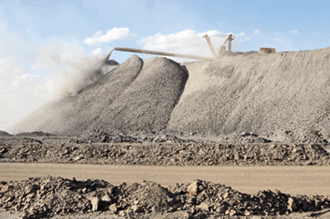
There are certain laws and rules to keep the pollution levels under control, but there also has to be an effective mechanism to ensure that these are followed and not circumvented. The importance of this is underlined by the fact that the Pollution Control Board has also revealed that under the National Air Monitoring Programme (NAMP), not just Sonshi, but five other mining clusters with 20 operational mines showed a regular increase in the permissible limits of PM10 (particulate matter) in the mining areas from October 2016 to March 2017. However, the levels of the particulate matter recorded were within permissible limits from mid-April to mid-May. The areas where the dust pollution exceeded the permissible limit are Amona, Assnora, Bicholim, Codli, Curchorem, Honda, Sanguem, Tilamol, Quepem and Usgao.
Given this background there is need of some mechanism to ensure mining companied adhere to the pollution rules and regulations and maintain the ambient air quality within permissible levels. If the bank guarantee is not acceptable, the Pollution Control Board could look at other means of ensuring that mining companies do not cross the permissible levels of pollution, by applying the polluter pays principle and charging the companies for the air monitoring exercise. Pollution levels are to be monitored not just in the vicinity of mines but along the entire route that the ore is transported from the mines to the jetty. Mining companies could be asked to pay a fee to meet the costs of the monitoring process, a solution that could allow Goa State Pollution Control Board to improve the quality of its monitoring, as what is important is a pollution-free environment.