The common theme during this Lok Sabha election throughout BJP’s campaign was that voting for a BJP candidate meant voting for Modi.
It was evident as Prime Minister Narendra Modi himself promoted this logic at different BJP meetings and many road shows during the campaign.
One of the main reasons given by the BJP is that in the last ten years, Modi has taken India’s economy to the fifth position, surpassing that of Britain. And according to Morgan Stanley analysts, India is on track to become the world’s third largest economy by 2027, overtaking Japan and Germany.
There is no doubt that there is a ray of hope in the country. India successfully hosted the G 20 Summit. It became the first country in the world to land on the South Pole of the Moon and in the last decade companies with more than 1 billion investments have emerged in India.
India’s middle class has also prospered to some extent as the stock market is hitting new highs every day. On the face of it, ‘Modinomics’, the economic approach of the ruling Bharatiya Janata Party, seems to be working. However, if we see the experts’ opinions, we tend to think who exactly has benefited from the Modi government’s policies.
India, which has overtaken Britain to become the fifth largest economy in the world, still has millions of people in a country of 1.4 billion people, who have to work hard for two meals a day. Many economists say that India’s economic growth rate has been uneven after the Covid epidemic.
The rich people are getting richer day by day. At the same time, poor people are victims of daily struggle. Although India has become the fifth largest economy in the world in terms of GDP, in terms of per capita income, India is still at the 140th position.
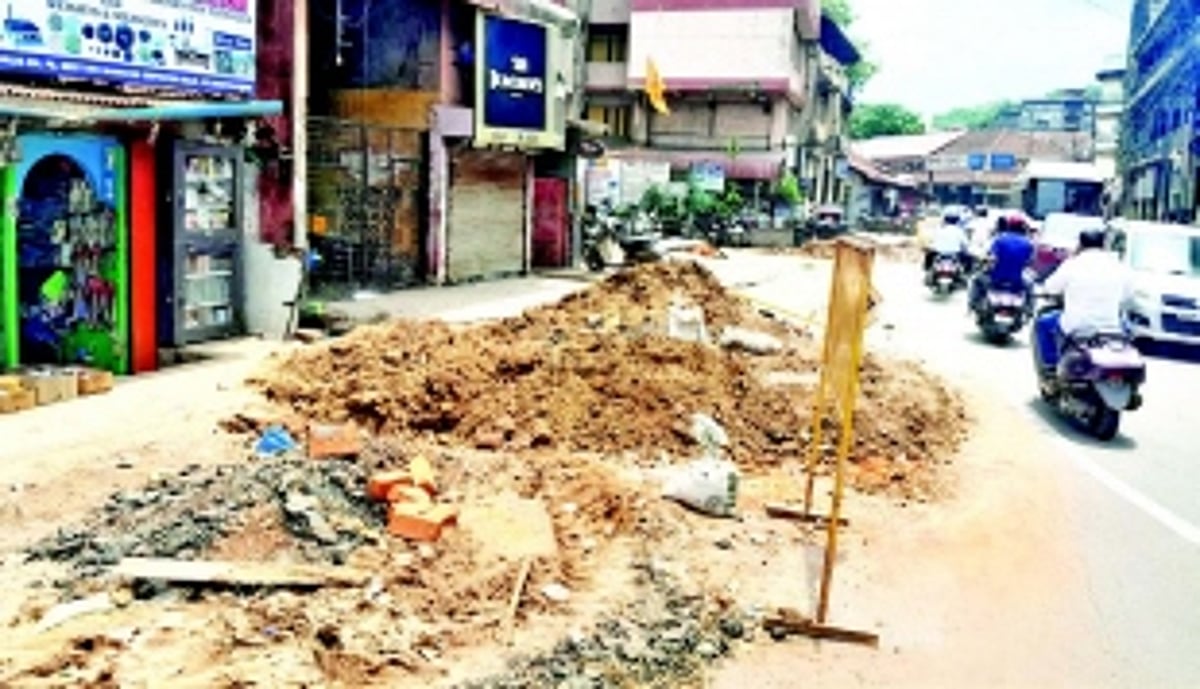
As of now, various developmental works are going on in every state of the country. Everywhere you look, you can see huge machines, cranes used to do such work. And some facilities that have been created can be labelled as milestones. For example, the first metro line was built under water in the city of Kolkata. Construction of new roads, airports, ports and metro lines is the major focus of Narendra Modi’s economic policy. For the past three years, his government has been spending over $100 billion annually on infrastructure development. Between 2014 and 2024, about 54,000 kilometers of national highways have been built in India. Which is double the number of national highways built in the last ten years. The Modi government has also changed its approach to bureaucratic functioning. For decades before, bureaucracy was said to be the most dreaded aspect of the Indian economy. But Modi failed to live up to everyone’s expectations. A ruthless lockdown was imposed during the pandemic. The effects of demonetisation in 2016 still loom large on the economy. The long-pending reform in the indirect tax system, namely the Goods and Services Tax was introduced, but many loopholes remained in its implementation. All this has had a far-reaching effect on the structure of India’s economy. India’s huge unorganized sector – the small businessmen who are the backbone of the country’s economy are still unable to recover from the impact of these decisions. At the same time, the private sector is also hesitant to invest heavily. Private investment in 2020-21 came down to 19. 6 percent, which was 27.5 percent in 2007-08. According to the latest data from the International Labour Organization, the number of educated youth among the unemployed in the country rose from 54.2 percent in 2000 to 65.7 percent in 2022. According to data collected by noted economist Jean Drez, there has been no significant increase in real wages or salaries in India since 2014. There is no doubt that digital improvements have been significant in the last ten years. Today, even people living in the nook and corner of India can buy many everyday items without cash by scanning a QR code. Linking the bank accounts of millions of people to the ‘digital system’ has reduced red tapism and corruption to a large extent.
But according to the latest research by the Global Inequality Database, India’s economic inequality has peaked over the last 100 years. In such a situation, it is not surprising that in recent times election campaign discussions have revolved around wealth distribution and inheritance tax.
A glimpse of this ‘golden age’ of India was recently seen in the three-day celebrations before the wedding of Indian billionaire industrialist Mukesh Ambani’s son. Mark Zuckerberg, Bill Gates and Ivanka Trump attended the event. Arnab Mitra, who researches consumer brands in India, says that today the business of luxury brand cars, watches and expensive liquor in India is growing much faster than that of companies that make consumer goods in India. A handful of big business houses have grown over ‘thousands of small companies’. Many experts believe that the country’s super-rich have benefited from the massive tax cuts. Under this policy, valuable public assets such as ports and airports have been handed over to a few select companies to build or operate. After electoral bond figures were released, many of these companies were found to be at the forefront of donating to the ruling BJP. Overall, India has a long way to go if it is to be among the developed nations, for which new economic policies need to be considered.