Two events during the week that went by show just how much Goa has to accomplish to come on par with other States in the country. We are aware of Goa being last to meet the ODF deadline, and also being the only coastal State to have not yet prepared the Coastal Zone Management Plan, but then there are other areas where Goa has failed.
Given this background of failures, it is hardly surprising that the National Green Tribunal (NGT) while rejecting the State government’s report on filling up mining pits said that the report demonstrates insensitivity on the part of Goa. The expressions used by the NGT should make the government departments involved hide in shame. Here, in brief, is what NGT said, “A preposterous suggestion has been made for filling up the mined out pits with solid waste in consultation with a Norwegian company. We therefore, have no hesitation in rejecting the report as unacceptable… If the proposal is to be accepted, it would amount to giving licence for commission of criminal offence apart from it being in violation of the Solid Waste Management Rules, 2016… The report clearly demonstrates the insensitivity on the part of the State of Goa in dealing with such a serious question where lives have reportedly been lost.” It allowed the State more time to submit a report, but has sought costs from Goa amounting to Rs 5 lakh.
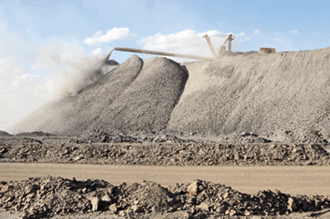
The history of the case leaves no argument on just how lax the State has been on the issue. Goa Paryavaran Savrakshan Sangharsh Samitee had filed a case that private players had created several pits with a view to excavate basalt/masonry and rubble stones. It had stated that after the extraction, the excavated area was left without scientific closure, which is necessary for restoration of the environment. The petitioners had pointed out that these were a potential death trap. NGT in December last year had sought a report from the Deputy Collector/SDM and the Director of Mines, but in February this year noted that the reports furnished by the Director of Mines were not complete. In April NGT had asked the State to take remedial measures and file action taken report within six months. That is the report NGT found did not meet the standards.
The other failure noted was when NITI Ayog released the India Innovation Index 2019. Here, Goa takes the third place amongst eight union territories, city, States, small States in the innovation ranking. Third place is not bad, but third in a field of eight is not too good a ranking. We live in a State that boasts of high literacy, high socio-economic indicators, yet we find that in innovation we have much to achieve if we are to excel. It was pointed out that the index will be useful to States to benchmark their performance against their peers and understand the reasons for their performance and devise better strategies towards creating an environment that fosters innovation. If that is to be so, Goa has to now begin the process to list out the reasons for coming behind Delhi and Chandigarh.
It is true that for the vast size of the country and its varied culture, the innovation needs of each State would be different and would need to be specifically understood so that there can be effective policy formulation. A single policy dictated from New Delhi would not suffice to meet the needs of every region, which would be different at every thousand kilometres away from the national capital on all sides. The idea, therefore, is to have every State formulate its own policy based on the resources that it has and its own strengths and which will meet the specific needs that are identified. Goa must begin to get its act together, in innovation and in following the orders of tribunals and courts.