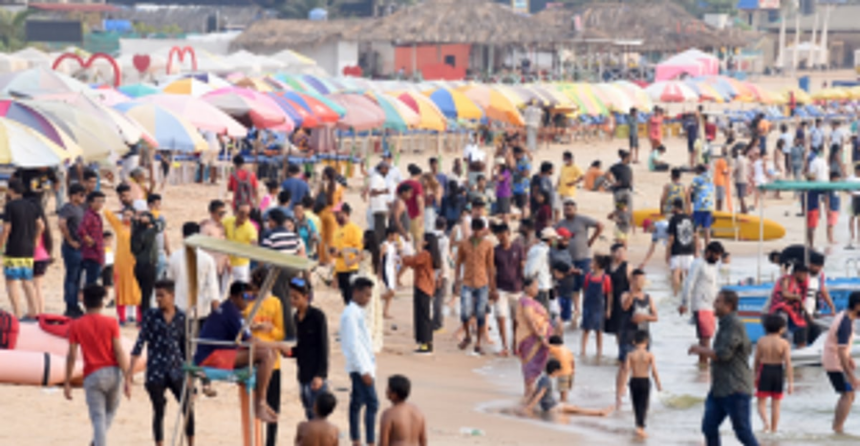
In the battle to fight the spread of the COVID-19 virus, Maharashtra has shown that it can take tough decisions, while Goa has opened its doors to all visitors without any restrictions, or even Standard Operating Procedures in place for them. As a result, the post-Diwali season has seen tourists throng Goa, most of them driving down in their own vehicles, while only a few coming by air or rail. We accept that Goa’s tourism industry needs to survive and for that it needs the tourists to come, but shouldn’t the visitors also behave responsibly?
The number of tourists in the State roaming around without adhering to the COVID-19 prevention guidelines has led the government to announce an increase in the amount of the fine for not wearing masks in public places. The fine has been doubled from Rs 100 to Rs 200. In the State capital Panjim, the municipal corporation has fined 400 tourists for not wearing masks. If the panchayats in the coastal areas do the same, the number could run well into the thousands. But will doubling the fine suffice to make the tourists wear their masks or should the government do more to prevent another wave of COVID-19 infections? Ideally, the measures should be more. This isn’t about upsetting any sections of society who may feel that being strict on masks will affect tourism. This is about the health of the people and preventing the spread of the virus.
Goa, currently has less than 100 new cases a day, but that can change if preventive measures are not taken immediately. The State is in the run-up to the peak tourism season and can expect an increased number of tourists in the coming weeks until the New Year. The government is well aware of that, but is it prepared for the increased numbers? Last week, the State government had directed the Health Secretary to hold an emergency meeting to study the standard operating procedures of Maharashtra with a view to adopt them for Goa if required. That was before Maharashtra unveiled its new SOP for travelers from the National Capital Delhi that is reeling under a third wave, and the states of Rajasthan, Gujarat and Goa. Essentially, those arriving in Maharashtra by air and rail have to produce a COVID-19 negative certificate, while those travelling by road will be screened at the borders for symptoms before being allowed to travel on, depending on how they test.
Will Goa adopt similar measures to keep its people safe? Against the backdrop of tourists roaming the beaches and streets of towns without masks, it turns imperative for the Goa government to be stricter with its SOPs. We have to go back just six months to recall that Goa remained safe from the virus until the time that its borders were closed, but the count began immediately after the trains rolled into the stations and then shot up the following weeks. Right now, there is no screening of travellers, but after Maharashtra taking its COVID-19 precautions to a different level, will Goa follow suit? The least that the State government can do is make COVID-19 negative certificates mandatory for travellers arriving in the State. Yet, at this time, it’s not just tourists that Goa has to worry about, but by the government’s own admission, it has to also find a way to deal with the arrival of the migrant workforce that will be returning to the State. It is not going to be an easy task.