‘Does the State want to criminalise us?’ is a question which I am sure we have had many opportunities to ask ourselves. This question once again crossed my mind on listening to a restauranteur share her predicament. The government has given her a licence to operate her establishment till 2 am, but the liquor license permits her to serve alcohol till 10 pm.
It is extremely rare for a restaurant serving alcohol to shut down at 10 pm. It is rarer for customers to sit at a restaurant till late when there is no alcohol. Consequently, to run a profitable establishment the poor lady perforce has to grease the palms of the local authorities so that she can serve her patrons till the sanctioned closing time 2 am.

These rules have not been passed just for her, there are other establishments who work under similar conditions.
Could it be that for a business, like a restaurant to operate, it must unwillingly subsidise an entire section of society who are salaried? This subsidisation comes at a cost. To juggle the cost of this subsidy, the owner may have to pay his employees less, reduce his income and pass this cost on to his customers. The government loses out on tax.
Can it be that the government and the administration do not realise the incongruency of the laws? Is it possible that the government and administration are unaware of the difficulties it causes to businesses and entrepreneurs?
But it seems a grease has been found to keep things moving. This system has not become a big deal because the rest of the society is not affected by it.
But what if our leaders come out with such rules for society as a whole?
Take the example of the Covid response in India.
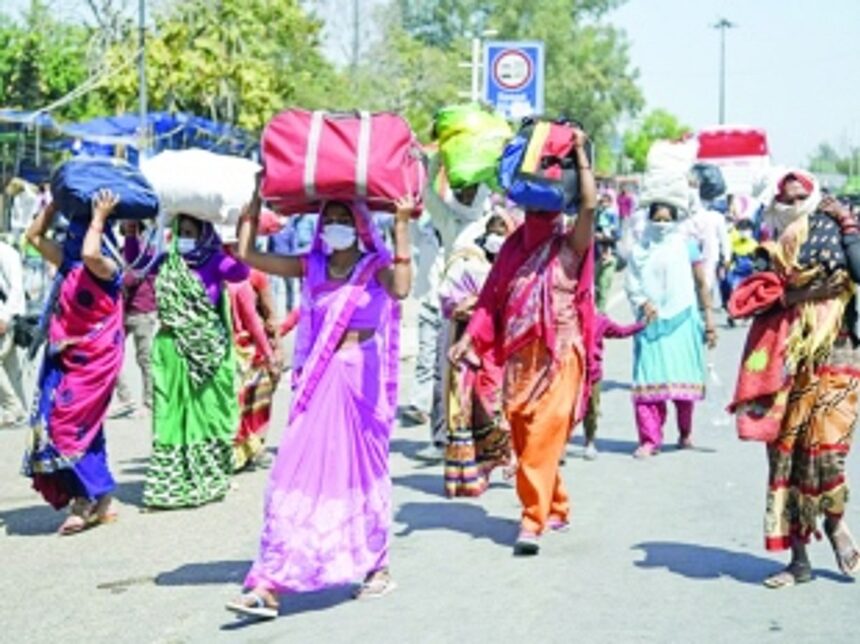
Prime Minister Modi’s sudden announcement of a Janata Lockdown in March of 2020 left citizens in socio-economic shambles. The absence of planning before such a massive decision was such that it resulted in millions of daily wage labourers walking back to their villages as they suddenly lost their income. If the rest of the government was left in the dark about this decision for a lockdown, then one could only imagine the situation of the district administration. It was no surprise that people were left to fend for themselves. In this situation citizens were forced to break the curfew to earn a living. Social media and the news were filled with stories of police and administration beating individuals and confiscating their goods as they desperately tried to earn a subsistence. In this case trying to survive became a criminal activity.
It is not only that such government decisions criminalise us as we conduct our day-to-day activities, but they can also morally bankrupt society. Many perceive such short-sighted laws or official notices as a bonanza as it gives them an opportunity to make a quick buck. This happens because such laws give one section of society more leverage over another section of society. Private hospitals are charging a bomb to treat Covid patients while ambulances and hearses fleece the desperate and grieving. Though the government has stepped in to prevent this price gauging, it is no match for the ingenuity that breeds on feeding off the helplessness of others.
This is not to say that moral bankruptcy is peculiar to such moments only. Infact, it is part of the country’s socio-political ecosystem. The Congress-I found ways to stymie attempts to bring to justice party members who participated in the Sikh genocide. One example in the case of the Bharatiya Janata Party (BJP) is its long and rich tradition of glorifying bigots, it continues to this day. The Aam Aadmi Party (AAP) has been boldly toying with the idea of a softer version of nationalism and Hindutva even though its antecedents were secular.
That we unquestioningly support these parties suggests that moral bankruptcy is part of the everyday and is an expedient way to live.
Some of the reasons why governments make decisions that eventually criminalise citizens is these are made with the idea of creating a perception that the government is capable and has things under control. As the result required is to create and promote a notion, expertise on perception management is sought instead of the issue at hand. The management of the pandemic in India is replete with examples. In the case of Goa, permitting casinos to operate at 50 % customer strength will go down in history as one such instance.
As we are seeing such decisions don’t bode well for citizens. The Goa government’s handling of the crisis has actually put the lives of Goans in jeopardy.
The fact of the matter is that ill-conceived decisions of any government harms people. Not only because they turn citizens into criminals but also because they have the potential to bring out the worst in people.
Unfortunately, in these times, moral bankruptcy has almost become a virtue. Not only are leaders not accepting their mistakes but are going out of their way to silence the truth. This is being done by either promoting a false narrative or using law to coerce. The everyday supporters of the government have taken on themselves to protect their leaders instead of acknowledging the human tragedy unfolding before their eyes.
Can India become a multi-trillion economy with such a mindset? Maybe this is not a question for this moment. The real questions are- how long will India remain willing to bear the consequences of bad decisions? And why is India willing to do so?
(Samir Nazareth is an
author and writes on
socio-economic and
environmental issues)