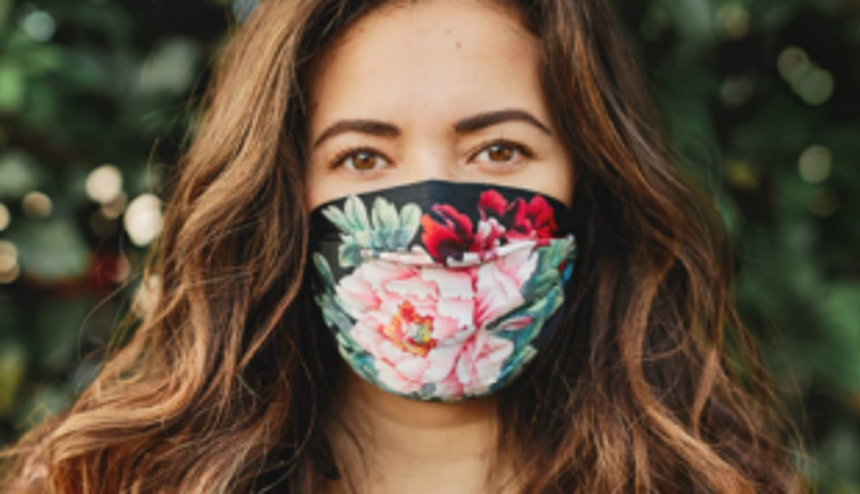
Shopping streets have a new fashion accessory and brands have built creative campaigns around it, but the truth is that the ubiquitous mask is leading to a lot of mental distress and anxiety in people. The fight against Covid-19 has made masks a necessity today. Consequently, masks have become an inherent part of social culture, a new fashion accessory, with brands building artistic campaigns about them. Not everyone, though, has taken to wearing masks seriously. Take a case of US President Donald Trump who embraced it only recently.
It’s true that we and the world don’t look the same through a mask—it makes one feel uncomfortable, strange and out of tune. Wearing a mask has also been theorised to bring psychological effects: disinhibition, as well as various psychological changes. Besides discomfort in breathing, blurred communication and forcing one to give non-verbal signals, masks also make one feel suffocating. And yet stepping out without one today is inevitable. People can’t leave the house without wearing mask. It’s a reminder to protect ourselves. Despite being uneasy, people are conscious of this new habit because it soothes the anxiety to stay protected and provides an illusion of being in control.

Masks hide facial features and identity of the person too. One has to think on this feeling of anonymity, that has catalysed a wave of anxiety, stress and fear, is now forcing many to re-evaluate its efficacy. What if it’s not worn? What if it doesn’t protect? With this ambiguity, the natural human response is to try and stick to the status quo, which in this case, has demonised the item that most represents the enemy: the mask. For some people, revolt against the mask gives a false sense of control and reinforces their denial of the disease. For others, it creates a feeling of being a risk-taker, a daredevil status amongst a sea of boringly repetitive daily activities.
For a majority of people masks help to filter out fear of the virus. The fear of contracting the virus is leading us to take protective measures that go beyond hand hygiene and social distancing. If we were reluctant to use masks at first, social pressure and constantly seeing people with their faces covered has created the need to buy them. Earlier, lack of stock in pharmacies and other places amplified the restlessness, fear and obsession to acquire one. The shortage led many to make their own masks, but homemade fabric masks can cause more distress, as the fear of not being properly protected can trigger anxiety in certain cases.
Masks have surely changed the way people think and function today. The traditional habit of looking suspiciously at a person wearing one, for instance, is not valid anymore which was probably the case earlier. Masks, which were sociologically identified with a tendency to hide something, have now become a sign of a conscious citizen who is not only doing good to himself, but also to those around him. If you are not wearing a mask in a public place, you may be stared at and even reprimanded.