They are often described as the future of the state, and lofty promises are made by the government to ensure their well-being and intellectual growth. But the fact of the matter is that young people in Goa, particularly secondary and higher secondary school students, have been at the receiving end of severe government apathy on many fronts in recent weeks.
For instance, students of Class XII, who are in the midst of answering their state Board examinations, have been afflicted by a myriad of problems. Candidates, particularly those residing along the North Goa coastal belt, have had to grapple with deafening trance and house music pulsating from private nightclubs – particularly at Morjim, Siolim, Anjuna and Vagator – as they desperately scramble for some peace and quiet in their homes to study. A delay or denial of justice in this matter means that only the local people, and in this case, young students, continue to suffer as they try to save themselves, protect their mental peace, and make the state proud all at once.

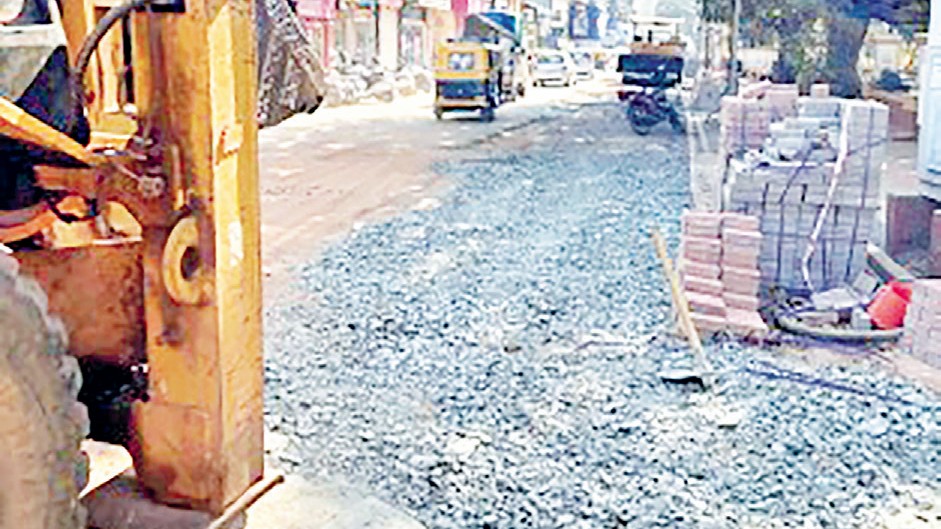
If that was not enough stress for tender minds to deal with, the mid-month closure of the Old Mandovi bridge threw them into another tizzy. Scores of students appearing for their Class XII Board examinations found themselves stuck in serpentine traffic jams while on their way to their respective exam centres. Many candidates ended up being unduly stressed, not only by the pressure of the tests they were about to take, but also by the possibility that they would reach their exam centres late and lose out on precious time allotted to them to answer their papers. The traffic police, who themselves had their backs to the wall in the matter, thereafter advised the affected students to set out for their exam centres earlier than usual. And to make matters worse, the bridge, which was expected to be thrown open in 15 days, continues to remain closed as maintenance work is yet to be
completed.
The most recent stressor turned out to be the state-wide broadband outage after the electricity department embarked on a spree of cutting fibre optic cables that had been strung from its poles in several parts of the state. Apart from students of Class XII, younger candidates who are preparing for the Class X state Board exam that is scheduled to commence from March 1, found themselves with no internet to access study material online.
According to parents, a significant number of students are heavily dependent on the array of study material available online to help them better understand the syllabus at hand and to improve their performance at exams, which have a domino effect when it comes to them choosing their future streams of education. With WiFi connectivity being unavailable owing to the tussle between the electricity department and internet service providers, it was the students who became the silent sufferers at a time when a thought should have been given to their difficulties and stress they might face.
Peaceful and quiet surroundings, a good network of roads, and a robust internet system are not a luxury. They are a necessity, especially in the present day and age when the world at large and the country in particular are developing at a rapid pace. If the government cannot provide these basic requirements to its younger generations – the pillars of tomorrow’s Goa – it should forthwith stop spewing rhetoric about how it is committed to the wellbeing and prosperity of children and the youth. It should put its money where its mouth is instead, and make sure all stops are pulled to ensure that at least young people are not affected by stressors such as these.
It would be a crying shame if the children themselves are eventually forced to come out onto the streets to demand better facilities from the government. It will hardly be a matter of pride for the government if that does happen. But will the state care? Or will it continue going about its business in its signature nonchalant style?