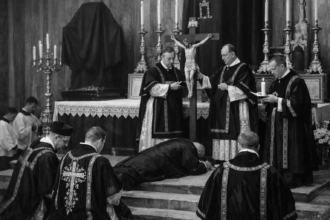
For Christians worldwide, Good Friday holds profound significance as it commemorates the crucifixion, death, and burial of Jesus Christ, the ultimate sacrifice for humanity’s sins, paving the way for the triumphant resurrection celebrated on Easter Sunday. This day marks the pivotal moment in salvation history, where Jesus’ willing suffering on the cross offers redemption and points to eternal life for believers.
Bells Fall Silent, Clappers Take Over

In Catholic tradition, church bells go silent from Holy Thursday’s Gloria until the Easter Vigil, symbolizing mourning for Christ’s passion. The wooden clapper, or crotalus, derived from the Greek krotalon meaning “rattle”, emerges as a somber substitute, its rhythmic strikes evoking gravity and absence during the Paschal Triduum. Introduced in the Tridentine Mass and occasionally retained in the Ordinary Form post-Vatican II, it underscores the shift from joyful peals to reflective clatter.
Historical Roots and Liturgical Role
The crotalus appears annually on Holy Thursday after the Gloria, when bells cease amid the Mass’s joyful opening, enforcing silence that prompts deep reflection on Christ’s tomb. At Good Friday’s Tenebrae, the “strepitus”, a great noise, further jolts the soul, mirroring the earthquake at Jesus’ death. This Latin Church custom, spanning centuries, replaces bells’ harmonious reverberations with a haunting sound to stir faith and emotion.
Diverse Designs in Goan Churches
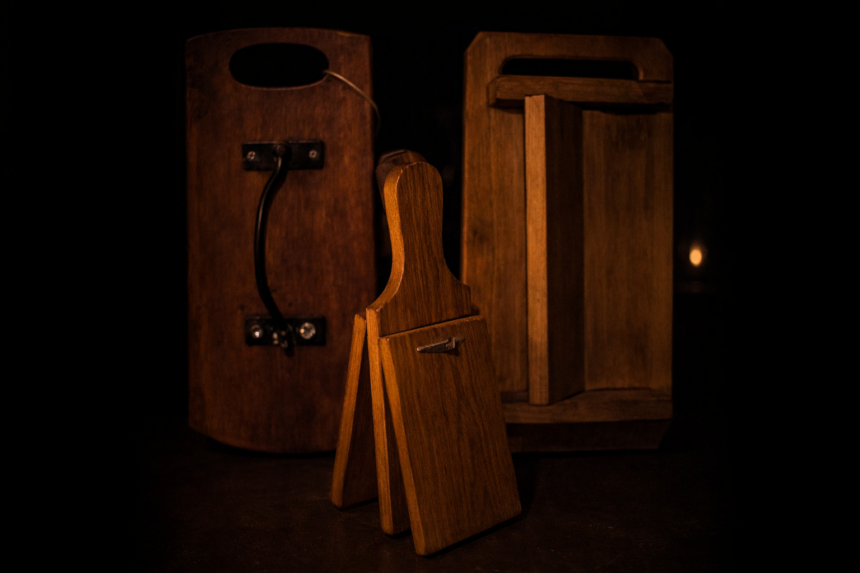
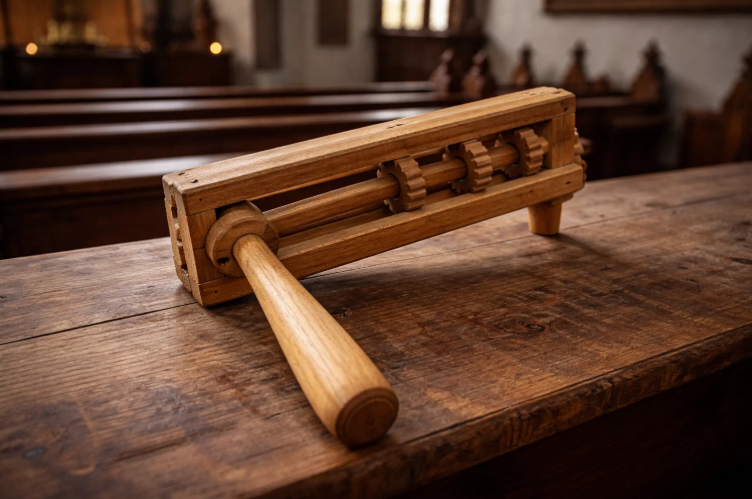
Crafted from wood, crotali vary: some feature an integral hammer striking the plank, others a gear-riding wooden piece for clicking, or Goa-style rectangular planks with door handles that clap metallically when shaken. These instruments foster a “grave solemn mood,” reminding the faithful of the crucified Lord until Easter’s bells resume.
A Tradition Fighting for Survival
Though popularity waned after Vatican II’s reforms, diminishing mid-20th-century use, the crotalus now revives in parishes statewide, thanks to young priests preserving Holy Week’s theological and historical depth. In Goa, where Good Friday features fasting, processions like Old Goa’s Xempddeachem Pursao, and liturgies with wooden clatters amid motets, this resurgence counters secular erosion of sacred heritage.
The Church, as liturgy’s guardian, links generations in a spiritual community transcending time. Revival of beautiful traditions such as this, infuses the modern world with solemn beauty, safeguarding traditions that teach faith through sensory reverence. Hats off to Goa’s priests trying to breath fresh air into these noble customs as Holy Week 2026 approaches.