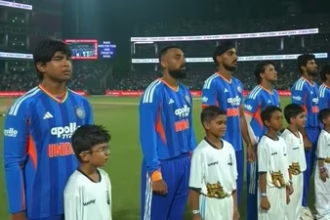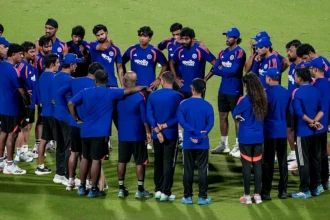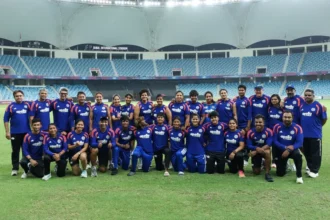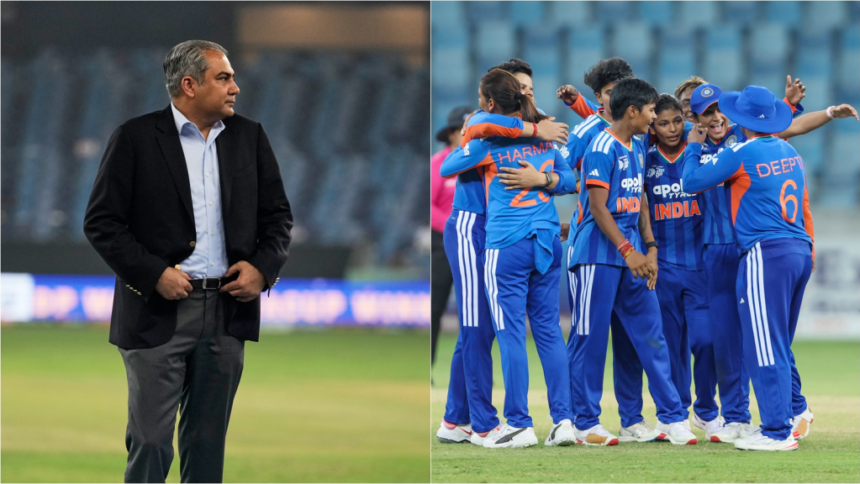
The BCCI had already made its position clear to the Asian Cricket Council (ACC) before the Women’s Asia Cup final: if India won the tournament and ACC president Mohsin Naqvi attended the presentation, the Indian team would not accept the trophy from him.
That stance played out after Harmanpreet Kaur-led India defeated Sri Lanka by 72 runs in the final in Dubai on Sunday to win a record-extending eighth Women’s Asia Cup title. The Indian players did not collect the trophy from Naqvi during the post-match presentation, following the position communicated by the Board of Control for Cricket in India (BCCI) ahead of the match.

According to a source quoted by The Indian Express, the BCCI had informed ACC officials about the team’s position before the final. The message was reportedly clear: if Naqvi was present at the presentation and India emerged victorious, the players would not receive the trophy from him.
The decision mirrors an incident involving the Indian men’s team less than a year ago. During the men’s Asia Cup in Dubai, India also declined to accept the tournament trophy from Naqvi, who is the president of the ACC.
The latest episode has now extended that stand to the women’s team, with Harmanpreet and her teammates following the same approach after completing a dominant campaign.
On the field, however, India’s focus remained firmly on the cricket. The team produced a convincing performance against Sri Lanka, winning the final by 72 runs and adding another Asia Cup title to its record.
The victory also gave India an eighth Women’s Asia Cup crown, further strengthening its dominance in the continental tournament. Sri Lanka, despite reaching the final, were unable to match India’s all-round performance on the big occasion.
The trophy presentation subsequently became the major talking point away from the cricket itself. Rather than accepting the trophy from Naqvi, the Indian players stayed away from the customary handover.
The development is significant because it shows that the position communicated by the BCCI before the final was not merely a precaution or negotiating stance. The Indian team followed through with it after winning the title.
The sequence also highlights the continuing tensions surrounding interactions between Indian cricket authorities and Naqvi. The ACC president’s presence at the presentation created a situation the BCCI had anticipated before the match.
For the Indian women’s team, the night ultimately ended with another major title, although the post-match ceremony drew almost as much attention as the result.
India’s eighth Women’s Asia Cup triumph therefore carried two separate messages: on the field, the team underlined its supremacy in Asian women’s cricket; off it, the players adhered to the position communicated by the BCCI before the final.
With the men’s team having taken a similar stance previously, the women’s team’s decision adds another chapter to the continuing controversy surrounding trophy presentations involving Naqvi.