KARSTEN MIRANDA
MARGAO: When Nelson Fernandes returned to Goa after years of working in the Gulf, he carried with him a clear idea of what he did not want to do. At the time, many Goans coming back after long stints in the Gulf followed a familiar path, opening bars or restaurants. Nelson wanted something different, rooted in a food culture he had lived with and understood.

That decision took shape on January 6, 2001, when he started Salam Fast Food in Margao. Shawarma, now commonplace across Goa, was then unfamiliar to most locals. For Nelson, however, it was never meant to be elaborate food. It was filling, quick and familiar — the kind of meal where two shawarmas and a soft drink were enough for dinner. It was this simplicity, he believed, that gave the dish the potential to work in Margao.
To make that idea possible, Nelson travelled to Muscat to source a shawarma machine, as such equipment was unavailable in Goa at the time. He brought the machine back himself and paid close attention to how it functioned. The burners, he explains, were imported from Lebanon. “When you use those burners, the texture of baking the chicken is totally different compared to the burners manufactured in India,” he says. He initially brought masalas from abroad for the first month before developing his own blends locally.
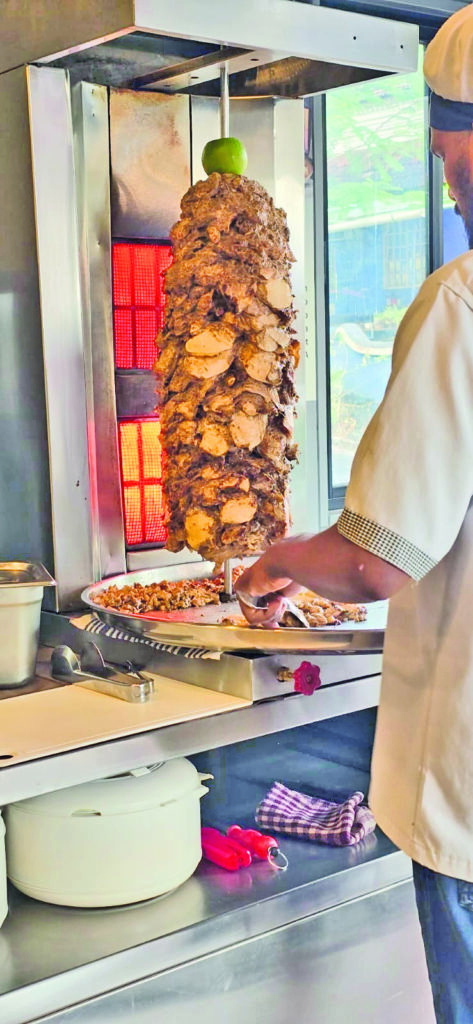
The setup in those early days was minimal. Nelson began with just the machine, a small table and some basic furniture — a couple of tipoys and chairs. When he approached a soft drinks company, they provided him with a small freezer, unsure whether the business would survive. “They were not confident whether this business would continue,” he recalls.
Survival, in fact, was uncertain from the start. The sight of meat rotating on a vertical spit drew curiosity but also ridicule. “People started laughing,” Nelson says. “They were asking what is this thing moving around on the machine.” On the first day, he sold around 50 to 60 rolls, using bread. By the next day, after realising bread was not the right fit and switching to chapati, sales collapsed. “I sold just two shawarmas,” he recalls. “But I did not give up. I said no, I will try my best to convince my clients to have this food.”
Over time, that effort found its audience. The simplicity of the food began drawing people from different walks of life — families, students, working professionals and regulars passing through Margao — all looking for something filling, familiar and quick. Nelson often notes that many of his earliest customers first came in as students, later returned as working professionals, and today walk in with their children.
As the years passed, Salam Fast Food also became a reference point. For many in Margao, thinking of shawarma meant thinking of Nelson’s small outlet — a place where one could get something different, tasty and quick. That association, built steadily over time, helped the dish find a wider and more loyal audience, shaped as much by returning patrons and word of mouth as by the growing attention the food began to receive.
He speaks strongly about what shawarma should be — and what it should not become. When he started, he recalls, some of his competitors — who had earlier been his customers — questioned his use of tahina, referring to it as a “white sauce”. Over time, several of those competitors opted for mayonnaise instead, a substitution Nelson believes fundamentally alters the dish by overwhelming its balance and character. “When you use mayo, you murder this dish,” he says.
Holding that line has come at a cost. Nelson remembers buying olive oil for Rs 240 a litre when he started. “Today it has jumped to Rs 2,700 a litre,” he says. Despite this, compromise was never an option. “My secret of this business is very simple,” he adds. “We will never compromise when it comes to quality. Money will come when it has to come, but you must keep your name.”
Looking back, Nelson describes the 25-year journey as demanding and, at times, hard to believe. “Sometimes when I sit, I ask myself, did I really complete 25 years or am I dreaming,” he says. Faith, he believes, played a central role in sustaining him through uncertain phases. He credits prayer and speaks with gratitude about his parents, who supported him even when their own health was fragile. The shop from which Salam Fast Food operates, he notes, belongs to his father — something he sees as a quiet but crucial foundation of the journey.
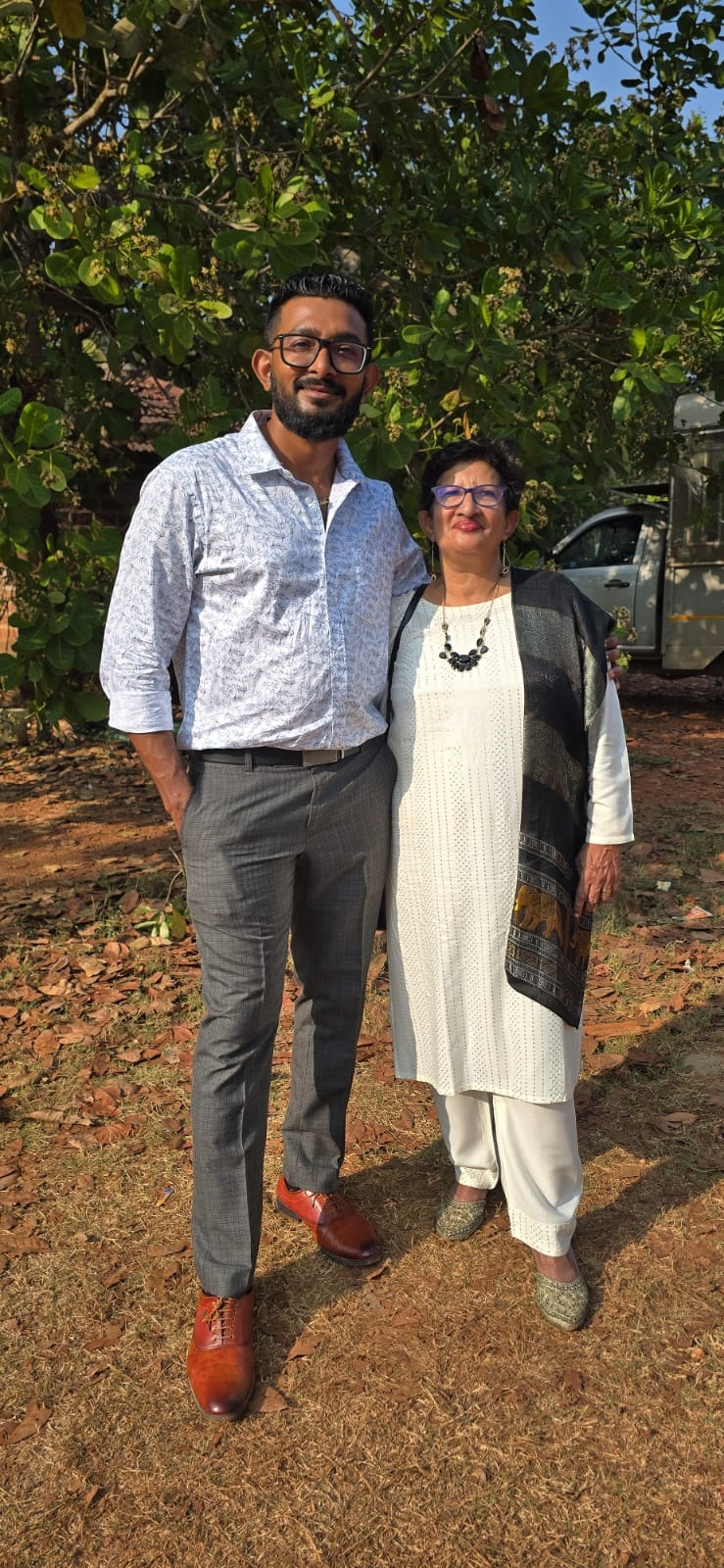
As competition increased and the demands of running the outlet grew, the business became a family effort. Nelson’s elder son, Malcolm, joined him and learned the process closely, understanding not just how the food was made but why certain standards could not be compromised. Since 2018, father and son have been running the business together, with Nelson remaining closely involved while ensuring continuity in approach and quality.
Before that transition, Nelson says his other son, Nixon, also spent time learning the business. Trained in hotel management, Nixon worked alongside him for a year, gaining hands-on experience before choosing to explore opportunities abroad. Nelson recalls encouraging that decision, seeing value in exposure to the international market while keeping the family’s roots in Margao intact.
Nelson also speaks with particular emotion about the role played by his wife, Melita Mascarenhas. “There is a saying — behind a successful man there is always a woman,” he says. Recalling difficult periods, he adds that when his chips were down, she would tell him, “Nelson, don’t worry. Not today — tomorrow. One day we will succeed.” He describes her presence during those moments as one of the quiet strengths behind the journey.
As Salam Fast Food completes a quarter-century, Nelson offers a message to young people, particularly those trained in hotel management. He urges them to consider starting something of their own if they have the opportunity, while recognising that business demands patience and determination. “Business is not a bed of roses,” he says. “You can find gold, but you must know where to dig.”