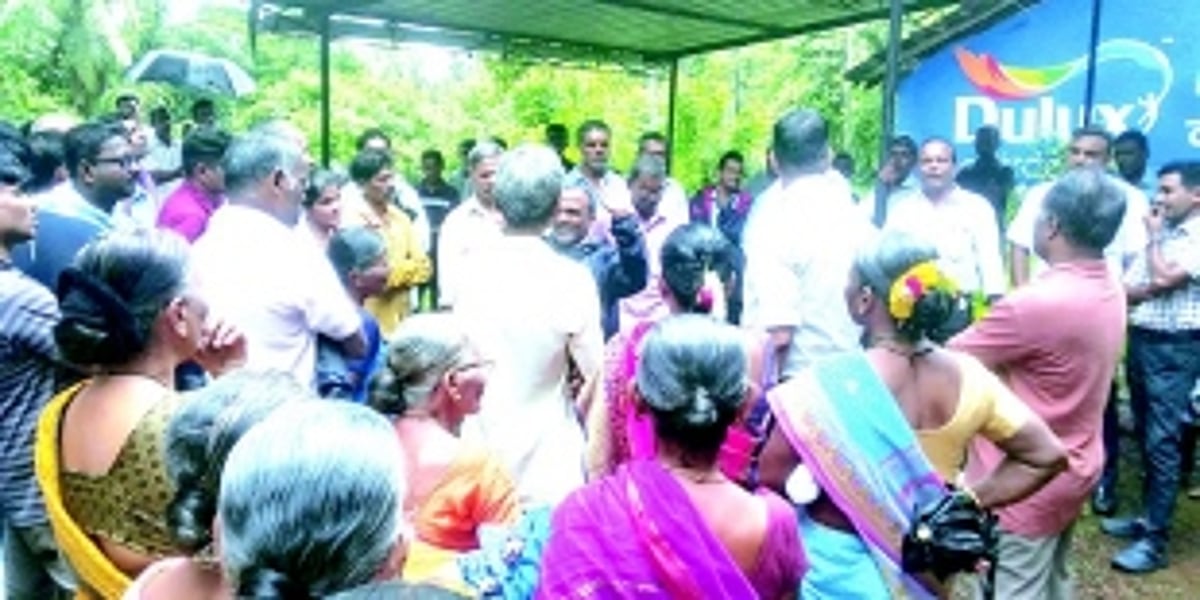
CALANGUTE: With the noise monitoring committee appointed years ago following a High Court order now inactive, several beach shacks in the Calangute-Baga beach belt have been blasting loud music late into the night, according to villagers who spoke at the Calangute panchayat’s gram sabha on Sunday.
Calangute Sarpanch Joseph Sequeira acknowledged the issue, stating that efforts would be made to revive the committee. However, he emphasised the complexity of the situation, noting that they do not want to take any steps that could jeopardise tourism businesses in Calangute.
“When the panchayat issues licences to shacks, they have to sign an affidavit stating that no music shall be played or fireworks displayed after 11 pm,” Sequeira said.
Villagers at the gram sabha expressed concern over the loud music, stating that it is a health nuisance for locals and is driving away quality tourists from Calangute.
“The sound of the music played in some shacks can be heard two kilometres away because they’re using sound systems meant for concerts. There’s competition between shacks to play the loudest music. Spending tourists, especially those with families, don’t want to sit in these shacks because of the loud music,” said Manuel Cardozo, president of the Goan Traditional Shack Owners Association.
Sequeira pointed out that one reason for the loud music is that Calangute residents often rent their shacks to outsiders. “They play loud music because they need to recover the money they pay as rent,” he explained.
With Calangute witnessing haphazard development, villagers suggested that data from a comprehensive resurvey of all existing structures in the village, proposed in a gram sabha resolution adopted on Sunday, be used for better planning of infrastructure, such as access roads, electricity, and water connections.
When questioned about the lack of proper medical facilities at the sub-health centre in Calangute, the Sarpanch cited a lack of cooperation from the Candolim Primary Health Centre (PHC) health officer, Dr Roshan Nazareth.
When contacted, Dr Nazareth stated that the facilities provided at the Calangute Ayushman Arogya Mandir Sub-health Centre are in line with government guidelines. Addressing the criticism from the Sarpanch, he explained that there is a one-day allopathic outpatient department (OPD) on Wednesdays, with blood collection and biochemistry services available. Nurses are present on all other days, and tele-consultations with doctors are offered.
“On the Sarpanch’s request, we also do blood collection on Mondays, and there is also ward-wise blood collection. The machines at the Calangute sub-health centre meet PHC standards, but their expectations are high. They want a doctor every day. We have three doctors available, but we also have to serve other sub-health centres under Candolim PHC,” Dr Nazareth said.
He added that they have requested a generator to be able to store vaccines at the sub-health centre to ensure they are not spoiled due to power outages.
Dr Nazareth also mentioned that a diabetic educator/dietician from the PHC visits the Calangute sub-health centre once a week, on Wednesday mornings, at the request of the Sarpanch. “It’s the only sub-health centre visited by a diabetic educator in Goa,” Dr Nazareth noted.
Crackdown on shady massage parlours, demand Gramsabha members
Calangute: The Calangute locals also raised concerns about the resurgence of some illegal massage parlours, fronts for the flesh trade, that had been previously shut down. Clotildes Braganza claimed that female Russian masseurs recently advertised suspicious services, offering ‘body-to-body’ massages on a banner displayed on the Calangute church gate. She added that similar services are still being advertised along with contact numbers, near Dolphin Circle.