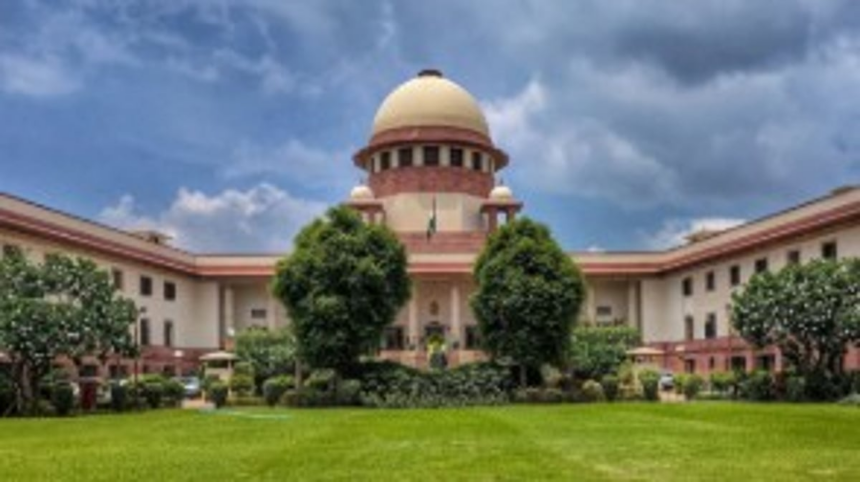
A Supreme Court case arising from Goa could have far-reaching implications for political defections across India. The case is expected to clarify whether MPs and MLAs can legally merge with another party on their own or whether such a move requires approval from the parent political party.
The issue has gained significance amid recent defections and merger claims involving parties such as the Trinamool Congress (TMC), Aam Aadmi Party (AAP), and Shiv Sena (UBT). At the centre of the debate is the anti-defection law under the Tenth Schedule of the Constitution.

The law allows legislators to avoid disqualification if a merger is supported by at least two-thirds of a legislature party. However, legal experts differ on whether this condition alone is sufficient or if the original political party must also formally merge.
The controversy traces back to Goa in 2019, when 10 Congress MLAs joined the BJP. The move was recognised as a merger by the Assembly Speaker and later upheld by the Bombay High Court, despite no formal merger between the two parties at the organisational level.
The Supreme Court’s eventual ruling is expected to provide clarity on the interpretation of the merger clause. The decision could influence the outcome of several ongoing political realignments and establish an important precedent for future defections in Parliament and state assemblies.
However, it provides an exception in cases of mergers, where at least two-thirds of a legislature party agrees to join another political formation.The controversy stems from differing interpretations of this merger clause. One view suggests that if two-thirds of MPs or MLAs support a merger, the move is valid. Another interpretation argues that the original political party must first merge with another party before legislators can claim protection from disqualification.The issue came into focus after the 2019 Goa political developments, when 10 of the Congress party’s 15 MLAs joined the BJP.
The Goa Assembly Speaker accepted the move as a valid merger, and the decision was later upheld by the Bombay High Court. The matter is now pending before the Supreme Court.Legal experts point to the Supreme Court’s 2023 observations in the Shiv Sena case, where it stated that a legislature party cannot be treated as the political party itself. This observation has strengthened arguments that MPs and MLAs alone cannot decide the fate of a political organisation.The verdict in the Goa case could have major implications for recent defections across India. It may ultimately clarify whether legislative strength alone is enough to justify a merger or whether approval from the parent party remains a constitutional necessity.