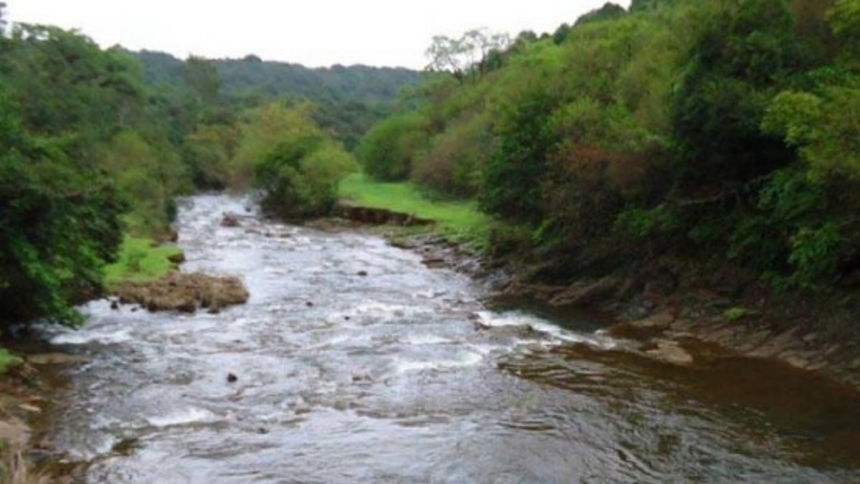
PANJIM: Goa’s primary freshwater lifeline is staring at an existential threat from Karnataka’s Mhadei diversion plans, even as environmentalists question the State government’s apparent lack of urgency in mounting an aggressive defence of the river.
Prominent environmentalist Captain Nitin Dhond warned that Karnataka’s aggressive diversion plans could choke the Mhadei before its waters reach Goa’s critical ecosystems and wildlife sanctuaries.

Addressing Heritage First Goa’s ‘Friends of Film: Our Rivers, Our Stories’ festival on the International Day of Rivers, Dhond said the threat to the Mhadei had to be viewed not merely as an inter-State water dispute but as a threat to Goa’s ecological and water security. The festival focused on the condition of Goa’s 11 major rivers, using films and storytelling to open conversations on pollution, diversion, rising salinity and siltation.
“While Karnataka already extracts over 140 TMC of water, primarily to sustain sugarcane cultivation, its push to divert the Mhadei from the Western Ghats will prevent essential flows from reaching two major wildlife sanctuaries — the vital water towers of Goa (Mhadei and Bhagwan Mahaveer Wildlife Sanctuary),” Capt Dhond said.
He warned that the threat extended beyond the diversion structures themselves, pointing to the destruction of catchments through illegal mining, monoculture and damming. The river system, he stressed, was far older than the political boundaries now being used to determine its fate.
Speaking to an audience of young filmmakers and conservationists, Dhond also traced the deep geological origins of India’s peninsular rivers and contrasted the reverence accorded to rivers in Indian culture with the scale of their exploitation.
“What has happened in the last century, or what is happening right now, is that the very thing that we are worshiping is being exploited left, right and centre by forces in politics, government and among people driven by greed,” he warned, stressing that rivers know no political boundaries.
Environmentalists said the implications for Goa were particularly serious because, unlike Karnataka, the State has no comparable alternative river system to fall back on.
Concurring with Dhond’s concerns, environmentalist Rajendra Kerkar said Goa faced a severe water-security challenge.
“Karnataka possesses multiple major river systems, including the Krishna and Cauvery, alongside over a hundred rivers larger than the Mhadei. In contrast, Goa relies on it as its primary, irreplaceable lifeline for drinking water and domestic supply,” Kerkar said.
Kerkar also pointed to what he described as a historical disadvantage for Goa in the framing of the inter-State water dispute framework.
He said Goa was not part of the Indian Union when the Inter-State Water Disputes Act was framed in 1956 and argued that the Central Government consequently failed to adequately account for Goa’s water needs and interests.
“Diverting the Mhadei risks permanently exhausting Goa’s primary freshwater resource. While Karnataka holds rights as a riparian State, it must acknowledge its abundance of alternative water sources. Within the Indian Union, Karnataka is obligated to consider the interests of smaller neighbouring States in a democratic, cooperative manner,” Kerkar said.
But the concern raised at the festival was not confined to Karnataka’s actions. Director of Goa Foundation Claude Alvares questioned the Goa government’s response, alleging that it had been reluctant to mount an aggressive legal challenge despite what he described as violations of existing Supreme Court orders.
“The inertia of Goa government suggests potential quid pro quo arrangements. Karnataka has dropped its opposition and cleared the path for the Goa-Tamnar Transmission Project, allowing 400 kV high-voltage power lines to pass through critical Western Ghats forests connected to Mollem sanctuary. In exchange, Goa government is going slow against Karnataka in the Supreme Court,” Alvares said.
Alvares alleged that the issue therefore went beyond a dispute over water and pointed to what he described as a wider pattern of political compromises affecting environmental protection and enforcement.
He further alleged that Karnataka’s diversion efforts were being driven by the demands of sugarcane cultivation and sugar factories in the Malaprabha basin.
“Karnataka government is encouraging sugarcane growers and local politicians to develop sugar factories in the Malaprabha basin, for which it needs water. However, under environmental law, the diversion of water from a protected sanctuary remains strictly illegal,” he said.
The speakers also underlined the role of public awareness in determining whether the Mhadei would remain a living river rather than merely a subject of court proceedings and government files.
Dhond urged filmmakers and storytellers to use cinema to reconnect people with ecosystems that are increasingly experienced through statistics, official reports and political debates.
“What you will create out of the movies is take the people much closer than what they are. You can take her to where she originates, how she feels, how she runs down the mountains, how she meanders around us… You can actually make them see, feel, and remember,” he said.