Team Herald
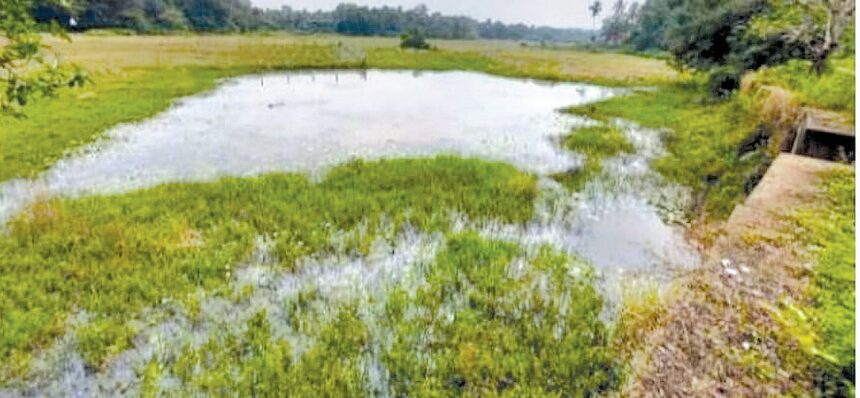
MARGAO: Farmers and villagers from Assolna are calling for the closure of the bandhara gates in September, a long-standing tradition that they believe is vital to safeguard their water bodies and agricultural land. This demand follows a recent petition filed by a local villager before the High Court, which prompted the Water Resources Department (WRD) to propose a November timeline for the closure. However, the farmers disagree, arguing that an earlier closure is crucial for protecting the local environment and ensuring adequate irrigation.

In response to the villager’s petition, the WRD reiterated that it has followed the practice of closing the sluice gates from November to April for water storage and irrigation. The department also noted that, following desilting work in May 2024, there have been no reported issues with soil erosion or field collapse. The WRD assured that any necessary future measures to prevent erosion would be implemented according to legal requirements.
In a contradictory statement however, the WRD also mentioned in its reply that there has been no intervention from the department regarding water management or crop cultivation at the bandharas, and that the concept of closing the gates in previous years was not part of their water management practices
Antoneta Cardozo, a local farmer, highlighted the historical importance of these water bodies, which have been essential for agricultural activities in Assolna. “The gates of the bandharas were traditionally closed in September-October for many decades. After the paddy harvest, many used the water for vegetable cultivation,” she said.
Another farmer emphasised that the gates were customarily closed in September, immediately after the paddy harvest, and opened in May before the monsoon. They stressed the importance of these water bodies in irrigation, groundwater recharge and maintaining well water levels and biodiversity support, providing breeding grounds for migratory birds.
A special gram sabha was convened last Sunday to address the community’s concerns, where it was resolved to preserve the traditional water bodies and raise awareness about their deteriorating state. Members decided to form a local monitoring committee involving senior citizens with traditional knowledge to guide repairs and strengthen embankments.