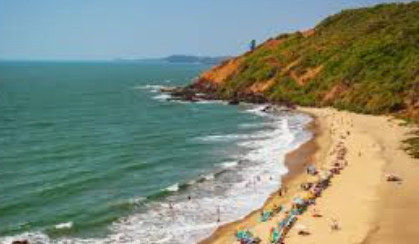
A foreign tourist’s detailed post describ ing groups of domestic male tourists allegedly staring at and filming women on Can dolim beach has added to a growing pattern of similar concerns reported along Goa’s coastline in recent weeks. The post, written by UK based traveller Michael O’Mahoney in the public Facebook group Goa Tour ism and now circulating widely through screenshots and reshares, appears as charter flights from the UK and several other coun tries begin arriving and the State intensifies efforts to reassure internation al visitors about safety on Goan beaches. O’Mahoney, who said he had otherwise ‘loved Goa and the hospitality’, wrote that the ‘huge downside’ of his trip was the number of men on the beach ‘who seem to be here only to stare at women’. In his post, he wrote: “One thing I have noticed is the amount of Indian men who usually don’t have any fe males with them. Obvious ly when you think a group of guys are on holiday, fair enough.” He said, “But in all honesty, the majority is on the beach doing absolutely nothing except staring and making it un comfortable.” He added: “At least one of them will pretend to be on a call but is clearly filming Western women relaxing on sunbeds. It’s very disturbing to watch.” While stressing there was no direct confrontation, he said the behaviour was ‘unsettling’ and ‘definitely affects whether we would come back’. As the post circulated, several Indian female tourists and Goan women who reshared it on other pages and groups said they had witnessed similar behaviour on popular stretches of North Goa. Their comments on reposts and reshares indicated that men loitering near sunbeds and staring at women was something they too had encountered on various beaches, suggesting the concern is neither new nor confined to Candolim. The reshares also brought in rec ollections from past seasons, with travellers pointing out that the issue surfaces annually despite repeated discus sions aimed at improving beach conduct. The timing of the complaint is notable as Goa has tra ditionally drawn large numbers of UK tourists, many of them repeat visitors who return year after year for long winter stays. For decades, UK travellers have formed one of Goa’s most loyal segments, with entire stretches of the tourism belt depending on this stream. With UK charters already arriving and more scheduled in the coming weeks, stakeholders say such early-season concerns can influence perceptions quickly, especially in a market with competing warm destinations. Industry professionals note that women’s comfort and the general atmosphere on beaches are among the first things international visitors evaluate. While most travel lers continue to enjoy Goa’s shacks, hospitality and relaxed environment, persistent accounts of staring or inappro priate filming can affect the sense of ease that repeat vis itors expect. “People come to Goa because they feel they can unwind,” a senior shack operator in Candolim said. “If they feel watched or uncomfortable, that affects the entire experience.” O’Mahoney’s post follows recent incidents at Arambol and Baga, where videos documenting harassment and per sistent staring prompted swift police intervention. In both cases, Goa Police initiated inquiries based on online mate rial, registered FIRs and arrested those identified. The re currences have reinforced the larger debate around beach discipline and whether existing supervision measures ade quately address behavioural issues that fall short of direct criminal acts but still influence visitor experience. Authorities said they are monitoring social-media plat forms more closely this season and have acted on several online complaints. In past seasons, the Tourism Department has announced measures to deploy tourist wardens to assist visitors and support policing on busy stretches, while Goa Police have separately acted against tourist touts and unau thorised operators following complaints of harassment. Of ficials say these steps are part of ongoing efforts to improve visitor experience during the high-footfall months. Tourists increasingly choose to document experiences of discomfort or harassment through public posts and re shares, which often circulate widely before formal com plaints are filed. In several recent cases, such posts have triggered prompt police response, underscoring how digital platforms have become an informal but influential reporting channel. With foreign arrivals expected to rise in the coming weeks and the festive period approaching, tourism stake holders say consistent enforcement, visible deterrence and respectful conduct on beaches will be essential to maintain confidence in Goa’s tourism environment.
Foreign Tourist Flags Harassment on Candolim Beach; Goa Tourism Faces Renewed Safety Concerns