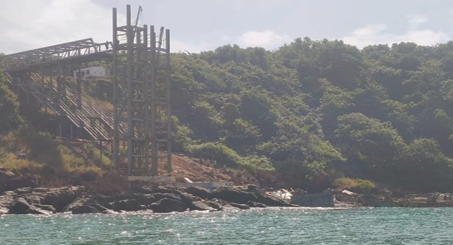
Tourism operators in Cavelossim–Mobor and fishing communities across Salcete have raised fresh alarm after the Mor mugao Port Authority (MPA) issued a tender for a feasibility study on de veloping a multipurpose terminal at Betul. The move has unsettled a wide stretch of coastal stakeholders, who warn that even a pre liminary feasibility exercise could reopen the possibili ty of large-scale industrial activity at the mouth of the River Sal, threatening liveli hoods, the local ecology and the tourism-dependent fab ric of the belt. Cruz Cardozo, president of the Goa Shack Owners Welfare Society and a resi dent of Cavelossim, said the tourism sector was shocked by the renewed administra tive movement on the port plan. He said the scope of the feasibility tender, combined with past references to coal and mineral cargo, had raised fears that the pristine coastline could be pushed into industrial territory. Car dozo said that any dredging, breakwaters or cargo-re lated activity “would effec tively destroy the tourism model of Cavelossim and Mobor,” which he stressed relies on stable tidal be haviour, a clean beachline and safe access to the Sal river mouth. He added that the very possibility of car go handling “will turn the coast black and drive away the European visitors who have supported this belt for decades,” drawing parallels with pollution concerns raised in other parts of Goa. The tourism sector, he said, had spent years building the area’s profile, and “one step in the wrong direction can undo what generations have worked for.” Tourism operators across the belt echoed similar fears, pointing out that ho tel occupancy, shack activity and water sports are direct ly dependent on the condi tion of the beach and the riv er mouth. Several operators said they could not imagine holidaymakers coming to a coastline associated with dredging, cargo dust or the movement of industrial vessels. Water sports oper ators warned that any inter vention at the river mouth could destabilise the sand bar and alter the currents that support boat rides, dol phin sightings and kayaking routes. A resort manager in Mobor said bookings had already slowed after the feasibility tender was an nounced, as tourists began asking whether a port was coming up in the area. Fishermen across Salcete have also expressed deep concern. Pele Fernandes, a traditional fishermen’s leader from Benaulim, said the feasibility study had re vived longstanding fears that the terminal would dis rupt fish-breeding zones in the shallow waters where species such as Chonak and Rauss spawn. “If those breed ing beds are disturbed, it is not only Betul that suffers,” he explained, noting that the entire coast from Betul to Colva relies on these natu ral systems. Fernandes said traditional fishing families would face devastating con sequences if the tides, sedi ment flow or marine habitat at the mouth of the River Sal were altered through dredging or construction. He added that the project, if advanced, would hit “every small-boat family that de pends on these waters.” Fishermen in Betul, who had earlier opposed the port plan, said the new feasibility exercise signalled that ide as once considered shelved were back on the table. They recalled that previous versions of the project en visaged breakwaters, deep ened channels and berthing arrangements for large ves sels—proposals they said could devastate the delicate interface between the river and sea. Several fishermen said their experience over the years had shown how even minor interventions at the river mouth can change fish movement patterns, tidal behaviour and overall marine productivity. The MPA’s feasibility ten der calls for a detailed ex amination of whether Betul can be developed as a mul tipurpose terminal linked to the wider MPA network, a concept earlier described in planning documents as a satellite-port model. Past outlines of the proposal in dicated that the terminal could be designed for cargo such as bauxite, iron ore and general goods, with layout options involving dredging, breakwaters and naviga tional channels. While these elements were part of earlier versions of the plan, stake holders said that revisiting them, even at the feasibility stage, was deeply troubling for a region where river and coastal dynamics are integral to both fishing and tourism. Cavelossim Sarpanch Dix on Vaz said the tender con tradicts the character of the area, which he described as fundamentally built on tour ism and fishing. He said any suggestion that the coastline could be opened to coal or mineral handling was alarm ing, especially given the con cerns raised in other parts of Goa about pollution linked to such cargo. Vaz pointed out that even the Goa Tourism Master Plan had never iden tified the Sal river mouth as a site suitable for port oper ations. “This belt survives on tourism and fishing. A port is simply incompatible with this landscape,” he said, add ing that communities would not accept changes to zoning or coastal-use rules merely to facilitate a terminal. Political reactions across South Goa had already been sharp. The Congress, the Goa Forward Party (GFP) and the Aam Aadmi Party (AAP) had all objected last week to any revival of the Betul port plan, warning that the proposal threatens a fragile ecologi cal zone and puts traditional livelihoods at risk. Stake holders said the feasibility tender had added to that po litical storm, prompting fresh demands for the government to clarify whether the project was being actively reconsid ered or whether the study was part of a broader plan ning exercise. Residents across the Sal river villages said the feasi bility step had brought back anxiety that had largely sub sided after the earlier plan was set aside. They said the river mouth and adjoining beaches are the heart of the region’s economy and warned that even small scale infrastructure linked to a terminal could alter the coastal profile. Villagers in Betul said they were await ing clarity from the govern ment and the port authority on what the study involves, and cautioned that any at tempt to push ahead with out adequate consultation would be met with organ ised resistance. Fishing and tourism groups in the belt said they were already discussing co ordinated responses should the study progress to fur ther stages. They stressed that the identity of the Riv er Sal coastline—as a fish ing and tourism hub shaped over generations—cannot be compromised by indus trial projects. Stakeholders warned that any move to advance the terminal would face determined and united opposition from villages that have repeatedly made their position clear
Betul Port Feasibility Study Sparks Outrage Among Cavelossim–Mobor Tourism and Fishing Communities