Caste remains one of the most visible and influential social structures in India, impacting nearly every aspect of life—from employment and education to customs, dietary habits, and interpersonal relationships. Though caste is largely hereditary, it is not entirely static. Through shifts in practices or marital alliances, some caste groups have historically altered their social standing.
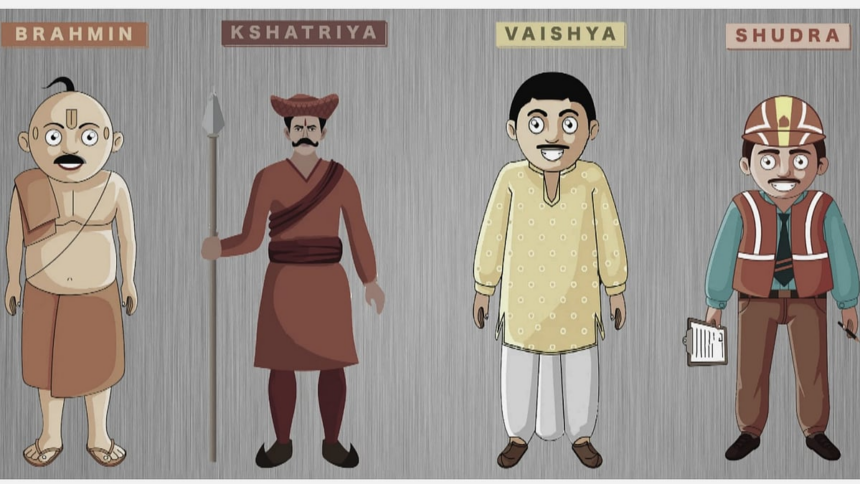
At its root, the caste system traces back to the varna framework of the Vedic period, which classified society into four broad hierarchical groups based on perceived purity and pollution: Brahmins (priests and teachers), Kshatriyas (rulers and warriors), Vaishyas (traders and agriculturists), and Shudras (manual laborers and service providers). A fifth category—Dalits or Scheduled Castes—fell outside this hierarchy and was historically often subjected to severe discrimination.

Over time, the varna model merged with the more localized and complex jati system, which now comprises over 3,000 castes and 20,000 sub-castes with regional variations and social rankings. The term “caste” itself was introduced by the Portuguese in the 16th century, derived from their word “casta”, meaning “lineage” or “breed.” It was used to describe the rigid, hereditary social divisions they observed in India. The English adopted the term from Portuguese, and it has since become a standard reference to India’s system of social stratification.
Brahmins: Custodians of Knowledge and Spiritual Wisdom
Brahmins were regarded as the embodiment of knowledge and spiritual discipline. Revered for their renunciation of worldly pleasures, they were believed to live in constant contemplation of the divine (Brahman). Serving as priests, teachers, rishis, and scholars, they led a life of celibacy and austerity. Even married Brahmins were considered ‘Brahmacharis’ if they remained detached from physical indulgence, engaging in intimacy only for procreation.
Significantly, the Brahmin status wasn’t exclusive by birth—individuals from other Varnas could attain it through rigorous learning and self-discipline. Traditionally, Brahmins were entrusted with educating the youth of all Varnas, ensuring continuity of ancestral wisdom through the guru-shishya (teacher-disciple) tradition. While primarily dedicated to spiritual pursuits, some Brahmins took on roles as warriors, merchants, or farmers during times of adversity.
Marriage norms allowed Brahmin men to marry women from the first three Varnas, though marrying a Shudra woman could diminish their priestly privileges. Brahmin women were respected for their chastity and moral strength, with scriptures like the Manu Smriti prescribing that they ideally marry within their Varna, though some flexibility was permitted.