Elsa Angel Rose
Queer persons and people who identify as LGBTQIA+ are celebrating their ‘Pride’ in their own ways, by themselves. “For me, every single day is Pride. Living my truth is Pride. I usually spend the month as I would any other day. Pride Month is a reminder of the struggles our community went through. It is a testament to our resilience, the journey of all who came before us, and the acknowledgement that it is their fight that makes it a little livable today, as it is. It is also a moment for us to collectively reflect on how much more we need to do to truly achieve complete, indiscriminate integration into mainstream society on a global level, also keeping in mind intersections with other marginalised communities,” said Francis H Fernandes, LGBTQIA+ member and activist from Borim. During the month, people belonging to the community get together to celebrate all forms of love and belongingness. “It’s a time when that confused and shame-filled queer kid gets to see that what he feels is not bad. Pride Month is actually for the ones who cannot openly celebrate it,” said Clynne Morgan Jorge from Panjim, a fashion designer who identifies as a queer person. Currently, in Goa, there are no events arranged particularly for Pride Month. Events do take place throughout the year, mostly in North Goa, particularly in Anjuna and Candolim, and are often organised by non-Goans. The challenges a person who identifies as LGBTQIA+ faces are countless and vary from individual to individual, depending on their social, economic, and other circumstances. Among these are discrimination at the workplace, difficulties while renting an apartment, and barriers to forming meaningful connections or making new friends. A recent and unprecedented blow to LGBTQIA+ people is the Transgender Persons (Protection of Rights) Amendment Act 2026. “The medicalisation of trans identities, the direct attack on personal autonomy, all result in challenges for trans individuals, whether they are out, have transitioned, are closeted, etc. A challenge for one of us is definitely a challenge for all of us, as it normalises stripping away rights as and when the legislative bodies deem fit, even if that means harm towards the marginalised communities,” shared Francis. The basic right to life and dignity has come under scrutiny with this amendment. “The biggest issue right now is trans rights being withheld. The basic right to life and dignity has always been threatened. Queer individuals are still facing discrimination and violence at the workplace, by their landlords, among friend circles and even in their homes,” said Clynne.

GOA’S PROMISE OF INCLUSION COMES WITH CONTRADICTIONS
For the most frequently and incessantly asked question of whether Goa is inclusive of its queer citizens, as always, there is still no one answer. Instead, there is a dichotomy of opinions. “I would say, as compared to the rest of India, Goa does have very much more open-mindedness when it comes to new and non-conservative ideologies. We have queer parties, exhibitions, theatre performances, drag shows, book launches, and more. At the same time, there is so much more that can be done better, especially in terms of having more public pride parades more often,” said Clynne. “Goa is certainly more inclusive to people who are different, perhaps not as much socially, but safety-wise”, said a fine art student from Panjim who identifies as a member of the queer community. People seem to agree on one thing: Goa is changing; the state has a very dynamic social fabric. “There has been considerable change in Goan society towards LGBTQIA+ people. There is more acceptance, but also intolerance, especially within professional spaces or in instances relating to inheritance,” said Dr Andy Silveira, associate professor at Goa Institute of Management, who identifies as Queer/Gay. Support and discrimination are equally experienced by queer people. Hence, the state is divided in its opinions towards the community. “Goa, in my personal opinion, is divided for sure. On one end, some people are absolutely true allies of the community and treat us with dignity and respect. On the other hand, some people either show allyship performatively depending on the environment or blatantly reject the fact that we exist, particularly due to religious biases. Goa does have a long way to go, for sure, and all it takes is simply interacting with the community with an open mind and listening to what we have to say, biases aside,” said Francis.
THE NEEDS AND ASPIRATIONS OF LGBTQIA+ INDIVIDUALS
Queer community in Goa also points out a much-repeated trend: homosexual people marrying heterosexuals and living a double life. “Goan society is dynamic. We experience support and discrimination in different measures. It depends on who can leverage their identity openly based on their status. One concern is LGBTQIA+ people marrying heterosexual partners to avoid stigma, while living a double life,” said Andy. The stigma associated with being queer also needs to be addressed. Education and awareness at a young age will have a more positive impact on the same. Another non-negotiable need is dignity. “Whether or not one understands or accepts LGBTQIA+ identities, it is imperative to treat our fellow human beings with dignity. Being LGBTQIA+ doesn’t make one alien or less of a human being. Being LGBTQIA+ can coexist with religious beliefs and other diverse variables, too, if one does identify with them. We are more than just LGBTQIA+ individuals. Like any other human being, we are pluralistic and complex beings, and very much ‘normal’. There are countless ways to be a human being, and there is room for all of us to coexist as our unique selves. That is definitely what society needs to engrave into their minds,” said Francis. Acceptance and support from both family and society are vital for individuals to express and embrace who they truly are.
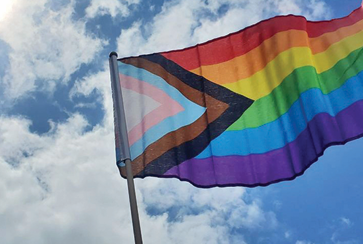
CELEBRATING PRIDE: FIVE THINGS TO KNOW! Pride Month is celebrated every June to commemorate the 1969 Stonewall Uprising in New York City, which catalysed the modern LGBTQIA+ rights movement. The rainbow flag, designed by Gilbert Baker in 1978, originally had eight colours; the six-colour version commonly used today became standard in the 1970s and 1980s. The first Pride marches were held in 1970 on the first anniversary of Stonewall in several U.S. cities, including New York, Los Angeles, and Chicago. Many governments, organisations, and landmarks observe Pride Month with official proclamations, flag-raisings, and events to promote LGBTQIA+ visibility and anti-discrimination efforts. Pride combines celebration with activism: issues highlighted during the month include legal equality, transgender rights, HIV/AIDS awareness and care, and protections for LGBTQIA+ youth and families